
Hybrid Athlete Hypertrophy: How to Build a Bodybuilder’s Physique While Running 15–30+ Miles a Week
Hybrid athlete hypertrophy means building real muscle size while running consistent weekly mileage. You get there by swapping heavy spinal loading for machines and unilateral lifts, taking those lower-risk lifts close to failure, biasing leg volume toward glutes and hamstrings, replacing some runs with cycling or sled work, and eating in a 3–5% caloric surplus.
Why So Many Hybrid Athletes End Up Strong but Flat
Here’s what the hybrid space keeps getting wrong. It treats “hybrid” as powerlifting plus running.
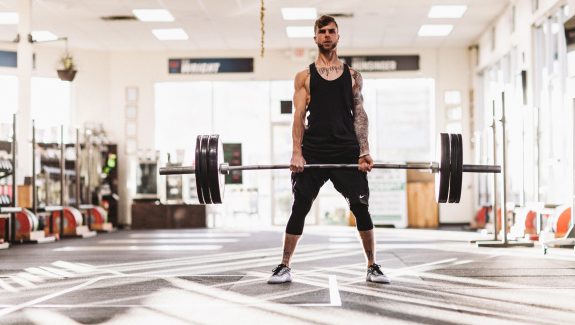
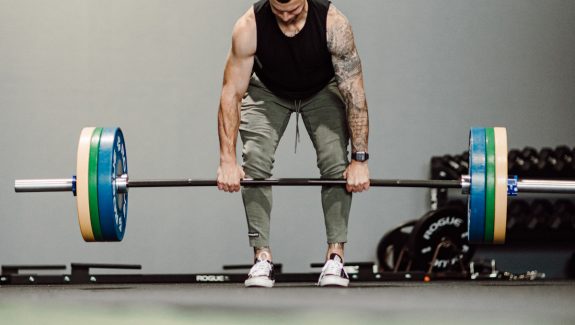
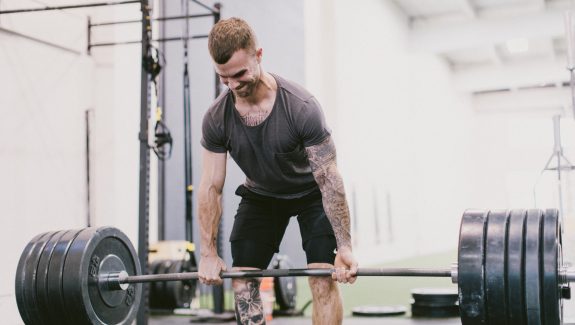
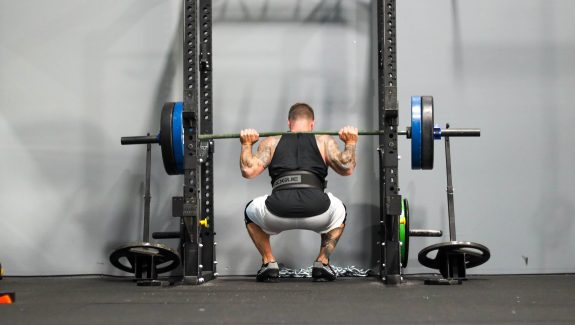
Barbell squats. Deadlifts. Heavy bent-over rows. Then a tempo run on top. For someone chasing a big total and a respectable 10K, that template can work. But if you care about how you look — full muscle bellies, symmetry, a physique that actually reflects the work — that template is fighting you.
The problem isn’t effort. Heavy bilateral barbell work and high mileage draw from the same limited recovery budget: your spine, your joints, and your nervous system. Stack them and something gives. Usually it’s your joints first… then your muscle fullness.
So here’s the reframe. Hypertrophy is more compatible with running than limit-strength training is. Strength is specific to the lift — a 2023 meta-analysis of 13 studies found free-weight strength improved more with free-weight training, and machine strength more with machines (Haugen et al., 2023). Translation: to get better at the barbell squat, you have to keep squatting a barbell. Muscle growth doesn’t carry that requirement. That same analysis found no difference in hypertrophy between free weights and machines.
Which means a bodybuilding approach gets to choose the exercises that load the target muscle hard while sparing everything else. I’ve used this with my own training and with hybrid clients for years, and the ones who keep adding visible muscle aren’t the ones grinding the heaviest compounds. They’re the ones who manage fatigue like it’s a line item.
If hybrid training is new to you, start with our Hybrid Athlete Training Guide. If you want the physiology behind why cardio and lifting compete in the first place, read The Science of Hybrid Training: Beating the Interference Effect.
Does Running Kill Muscle Gains? What Concurrent Training Hypertrophy Research Shows
No — but it can blunt them, and the dose and type of cardio decide how much.
The landmark 2012 meta-analysis pooled 21 studies on concurrent training (Wilson et al., 2012). Lifting plus cardio still produced solid hypertrophy, though less on average than lifting alone. The interference grew as the frequency and duration of endurance work went up. And here’s the detail that matters for you: running produced significant decrements in hypertrophy and strength, while cycling didn’t.
Newer data is more encouraging. A 2022 meta-analysis of 43 studies found no meaningful difference in whole-muscle growth between concurrent training and lifting alone — explosive strength was the quality that took the hit (Schumann et al., 2022). A companion analysis looking at individual muscle fibers found some blunting of type I fiber growth, and again tied the negative effect to running rather than cycling (Lundberg et al., 2022). To be fair, the whole-muscle analysis didn’t find a difference between running and cycling. But between Wilson and the fiber-level data, the signal points one direction: if your cardio is going to cost you muscle, running is the more likely culprit.
Plain English: you can build muscle while running. But “can” isn’t “will by default.” The variables in the rest of this article are where that gets decided.
Which Exercises Build Muscle Without Overloading Your Spine?
Simple: stop loading your spine so much.
Okay, slightly more nuance than that — but not much. Every run puts thousands of foot strikes through your legs, hips, and lower back. Your spine and nervous system don’t have an unlimited recovery budget for that, plus heavy barbell squats, deadlifts, and bent-over rows on top of it.
To be clear, barbells aren’t dangerous by default. An updated 2024 systematic review found injury incidence in powerlifting is relatively low — roughly 1 to 4.4 injuries per 1,000 training hours — but the lower back and pelvis topped the list of injured sites (BMJ Open Sport & Exercise Medicine, 2024). Translation: when heavy compound lifting does go wrong, it tends to go wrong in the exact region that’s already absorbing your mileage. That’s a bad place to concentrate risk when the muscle-building payoff is available elsewhere.
And it is available elsewhere. Remember the Haugen meta-analysis: machines and free weights built muscle equally. Mechanical tension on the muscle drives growth, not the implement creating it.
Swap Bilateral Barbell Work for Machines and Unilateral Loading
| Instead of… | Try… | Why it works for a runner |
|---|---|---|
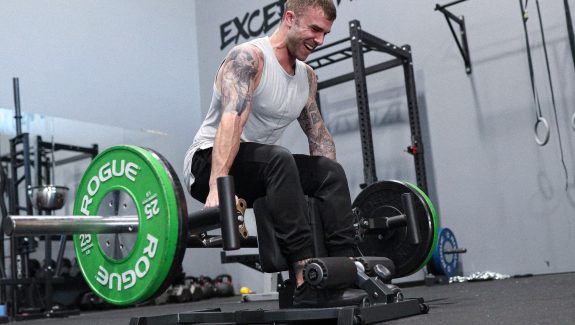
| Barbell back squat | Pendulum squat, hack squat, leg press, Bulgarian split squat | Quads take the load without a bar compressing your spine |
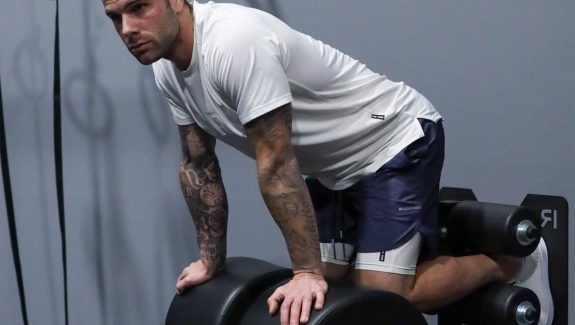
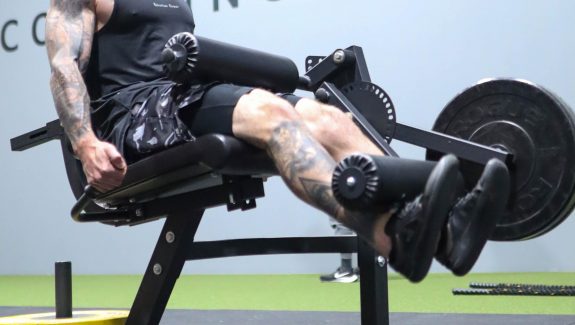
| Conventional barbell deadlift | Seated leg curl, 45° back extension, machine hip thrust | Trains hamstrings and glutes directly, with far less axial fatigue |
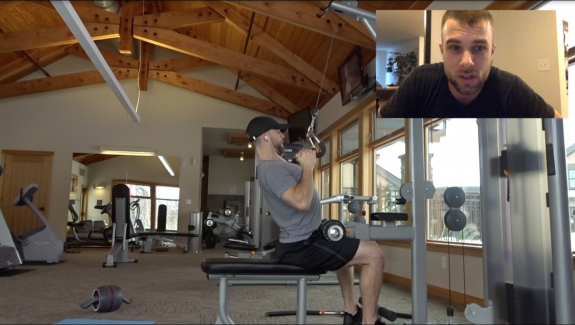
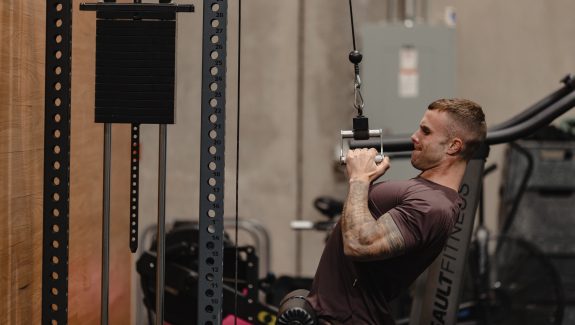
| Barbell bent-over row | Chest-supported T-bar row, seal row, cable or machine row | Your back isn’t capped by how long your lower back can hold a hinge |
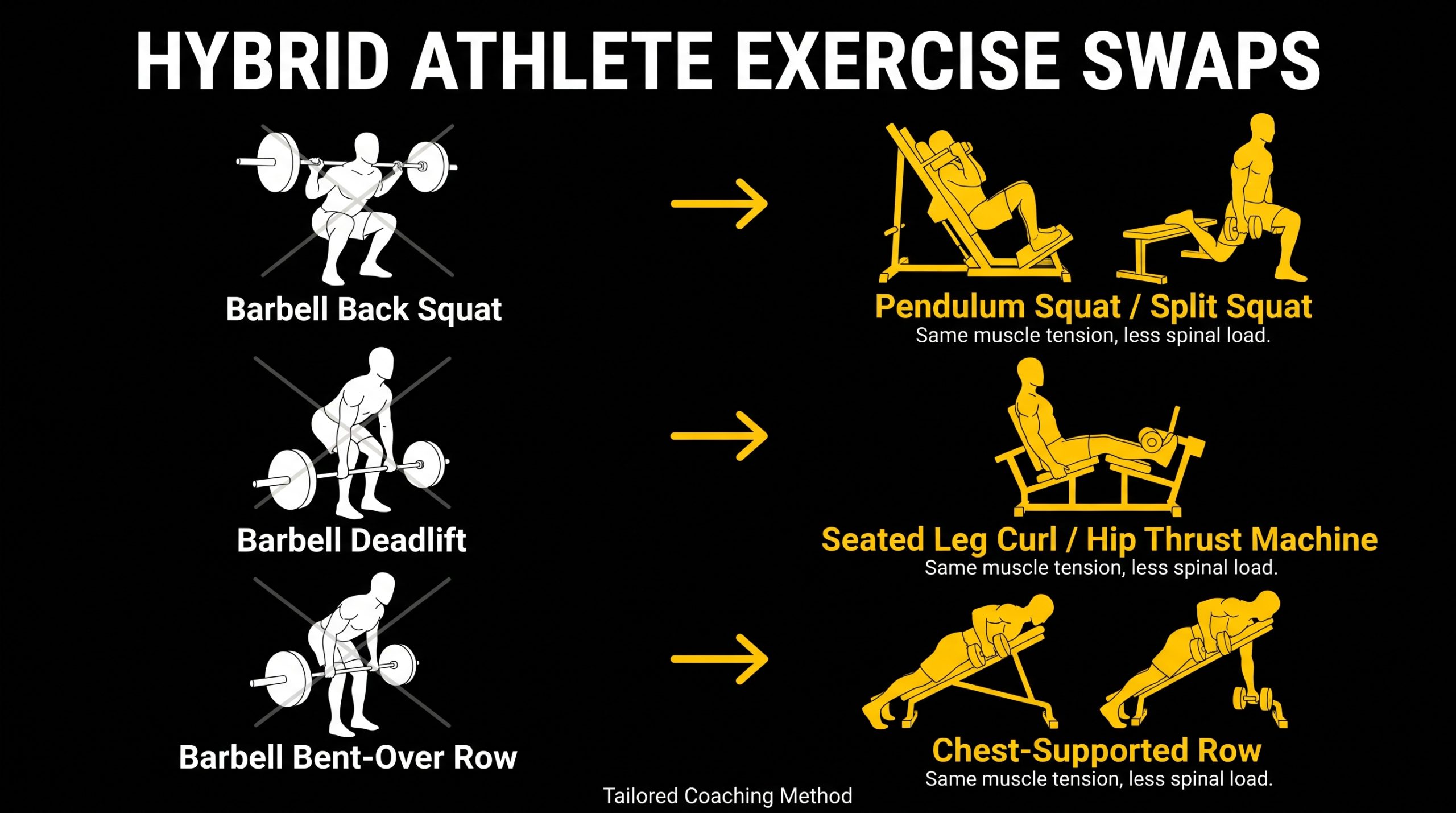
That last point matters more than people think. A barbell row is limited by how much you can hold in a bent-over position — so your lats and mid-back often stop before they’re anywhere near done. Support the chest and the target muscle becomes the limiting factor. Which is the whole point.
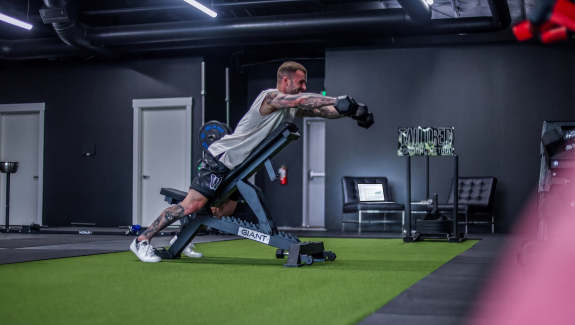
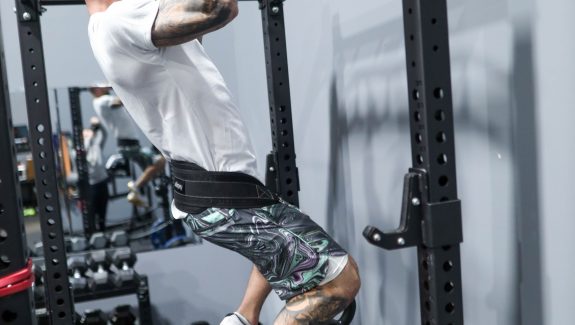
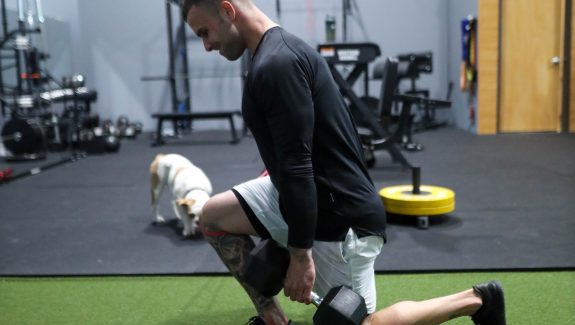
Unilateral work does something similar for the legs. In a split squat, each quad works against a heavy load relative to that one leg, while the total weight running through your spine is a fraction of what a bilateral squat would need for the same per-leg stimulus. It’s easier to recover from skeletally and neurologically — and in my experience, clients’ knees and backs tolerate it far better through mileage blocks.
Can You Still Chase the Pump and Use Isolation Machines?
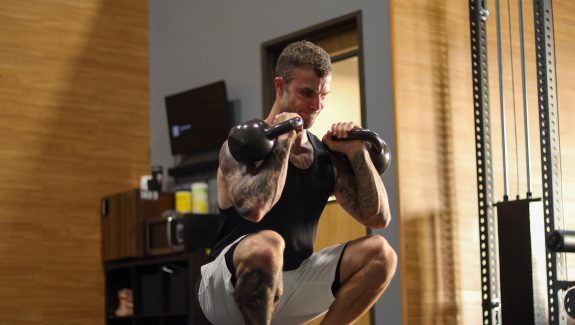
Yes. Hybrid training doesn’t sentence you to kettlebells and cleans.
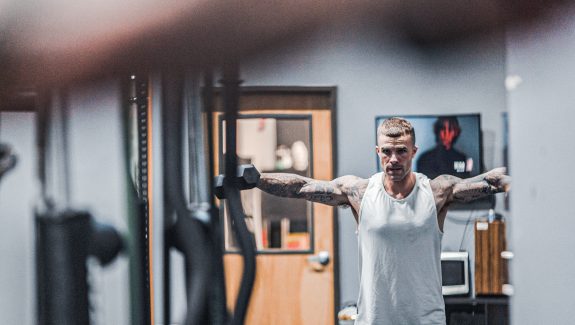
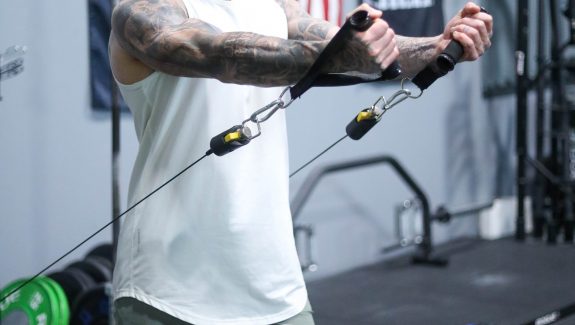
Leg extensions, lateral raises, machine flyes, cable curls — these create local muscle fatigue with very little systemic cost. Pick the machines that feel good on your joints (that’s individual, and worth testing), and pick isolation work that balances out the quad dominance running creates.
One thing I do keep: a small dose of explosive work, like bodyweight jumps or light med ball throws. Here’s why. In the Wilson meta-analysis, power was the quality concurrent training impaired the hardest — more than strength or size. A few low-volume explosive sets keep that quality alive without adding meaningful fatigue.
Does Running Count as Leg Volume for Muscle Growth?
No. Running doesn’t load your legs the way hypertrophy requires — there’s no high mechanical tension near failure and no loaded stretch. (Untrained people can see small size gains from endurance work alone. A trained lifter shouldn’t count on it.) So your hypertrophy sets get counted separately from your miles.
But does running “count”? For growth, no. For fatigue, absolutely. It’ll run you down. Pun intended.
The Quad Overuse Trap
Running throws a huge amount of repetitive volume at your quads, patellar tendons, calves, and Achilles. Stack a high-volume quad program on top and you can tip into more breakdown than buildup — which is the opposite of what you’re training for.
The fix is to bias your gym leg volume toward glutes and hamstrings. Two reasons:
→ They’re less saturated by your mileage. Your quads and calves are already doing a ton of work every run. Your posterior chain usually has more room to absorb productive gym volume.
→ It balances the system. In my experience coaching hybrid athletes, the ones who build their hamstrings and glutes are the ones whose knees and hips hold up when mileage climbs.
For hamstrings specifically, favor positions that train them long. A 2021 study found seated leg curls (hamstrings stretched at the hip) produced greater hamstring growth than lying leg curls — roughly 14% versus 9% over 12 weeks in previously untrained adults (Maeo et al., 2021).
How to Train Quads and Calves Without Aggravating Your Tendons
You can still train them. Just train them like a bodybuilder, not like a powerlifter:
→ Load the deep stretch. Running never puts these muscles under load in a lengthened position. Pendulum squats to depth and seated soleus raises with a pause at the bottom do.
→ Slow the tempo and pause in the stretch. You get a strong stimulus with far less load on the tendon.
→ Go unilateral where you can. Same muscle stimulus, lower absolute load.
→ Keep total sets low-to-moderate. Lower than you’d run in a pure bodybuilding block. The miles are already doing work here.
Should Hybrid Athletes Train to Failure?
Yes — on the right exercises. Here’s the rule I give clients:
Take machines and cables to failure. Keep heavy free-weight compounds a rep or two shy.
Proximity to failure matters for growth. A 2023 meta-analysis of 15 studies found failure training held only a trivial edge over non-failure training (Refalo et al., 2023), and a 2024 meta-regression found hypertrophy improved as sets ended closer to failure (Robinson et al., 2024). Plain English: you need sets that end within about a rep of failure. You don’t need to grind every set into the floor. Effort is non-negotiable — choose hard — but where you spend that effort is a choice.
And failure isn’t free. When trained men took squat and bench press sets to failure, neuromuscular recovery and muscle damage markers lagged significantly behind a volume-matched non-failure protocol for 24–48 hours (Morán-Navarro et al., 2017). Translation: failure on a big barbell lift bleeds into the next one to two days — which is exactly when your tempo run or long run shows up.
Now, to be honest about the evidence: that study didn’t compare machines to barbells. The machine-versus-barbell part of my rule comes from mechanism and years of coaching. A leg press set to failure ends when your quads quit. A barbell squat to failure ends with you under a loaded bar, spine compressed, technique breaking down. Same muscular effort. Very different systemic and injury cost.
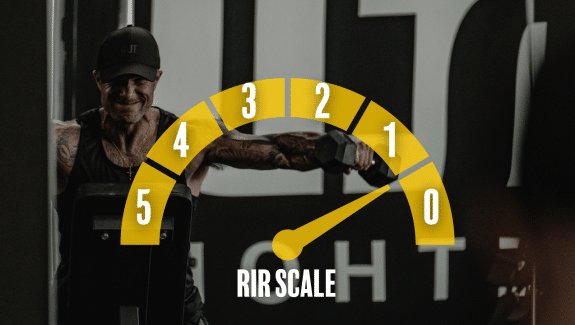
→ 0–1 reps in reserve: pendulum squat, leg press, hack squat, cable rows, pulldowns, flyes, extensions, curls.
→ 1–2 reps in reserve: dumbbell presses, split squats, and other free-weight work you keep.
→ 2–3 reps in reserve, low volume: barbell squats or deadlifts, if you keep them at all.
Why Cycling, Sleds, and Rowing Interfere Less With Muscle Than Running
Every running stride has a landing phase where your muscles lengthen under load to absorb impact. That eccentric braking is a major source of muscle damage and soreness — and it’s piled on top of what you’re doing in the gym.
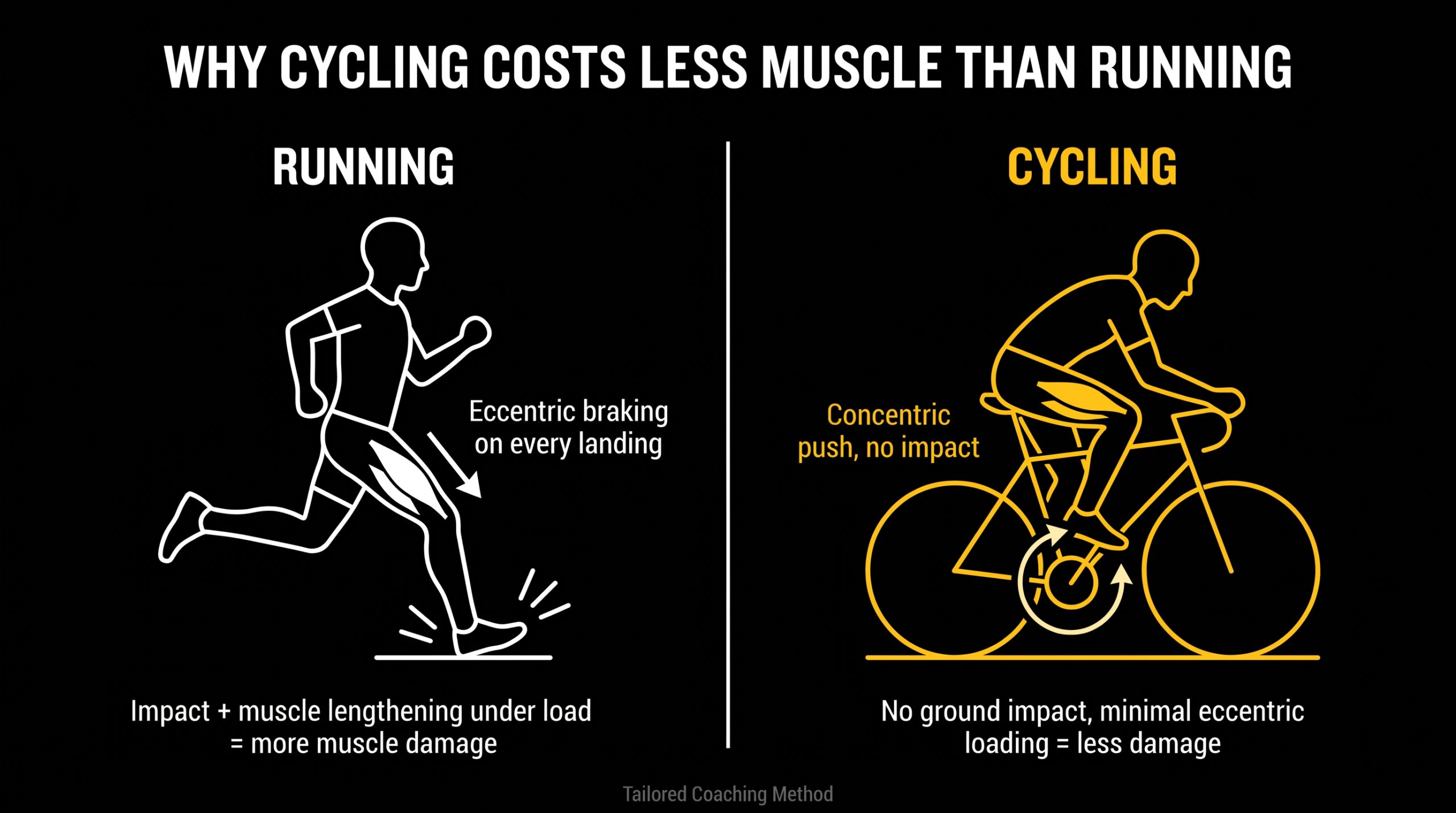
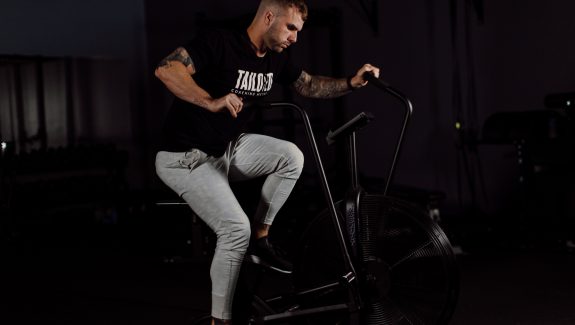
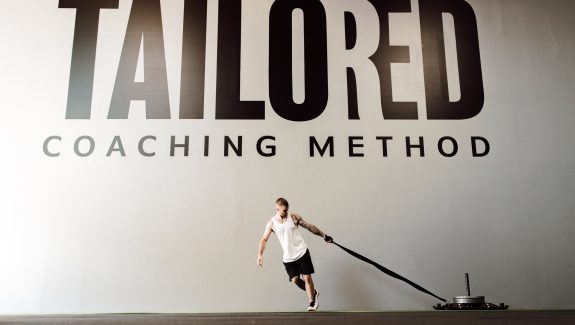
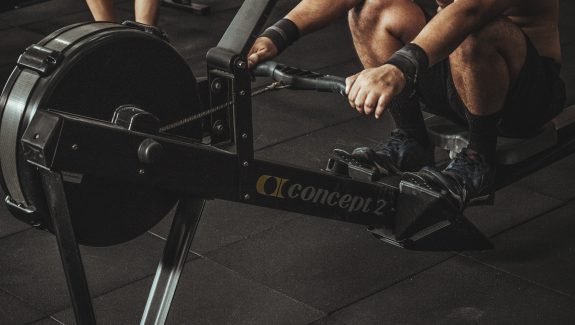
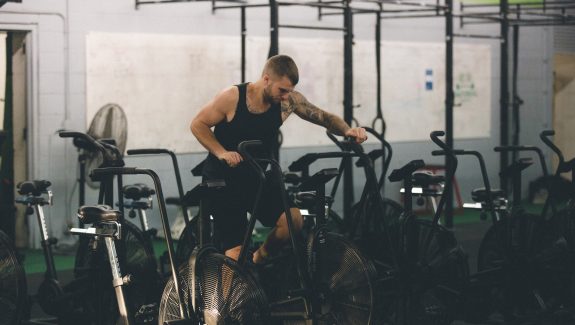
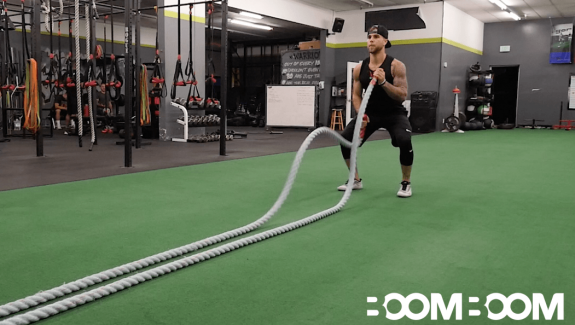
Cycling, sled pushes and drags, rowing, and the SkiErg are essentially concentric-only. No ground impact, very little eccentric loading. You still drive blood flow into the working muscles, build mitochondrial density, and grow your aerobic work capacity. You just skip most of the structural cost.
That lines up with the research: in the Wilson meta-analysis, running — not cycling — drove significant decrements in hypertrophy and strength, and a 2017 review of the interference effect pointed to running’s eccentric component and the muscle damage that comes with it as a likely reason (Coffey & Hawley, 2017).
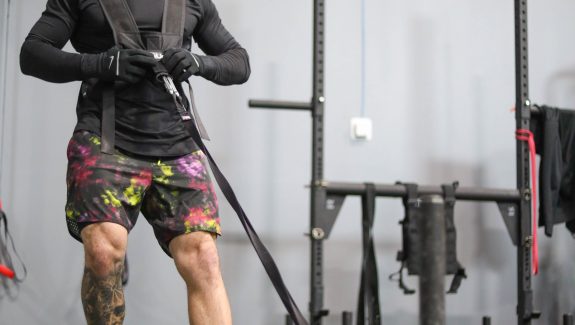
So why not just bike everything? Because you’re a runner, and specificity is real. If you have a race on the calendar, your key runs (the long run and the quality session) stay runs. The swap happens around them: turn an easy run into a 45-minute easy bike, or use sled pushes as your conditioning finisher instead of adding junk miles.
What’s a Good Training Split for a Bodybuilder Who Runs?
It depends on training age and on which body parts need to come up. A beginner and an advanced lifter shouldn’t run the same split, and neither should someone with lagging quads versus lagging delts.
But the principle doesn’t change: you can’t recover from as much leg volume as a lifter who doesn’t run. Your upper body isn’t absorbing mileage, so it gets more of the training week.
A Split That Works for Many Clients: Upper / Lower / Push / Pull
A split I use often with clients building muscle while running is Upper / Lower / Push / Pull. Legs get one dedicated session. The upper body gets three days — one full upper day, one push day, one pull day. If a client needs posterior chain work for balance or injury prevention, I tuck glute and hamstring isolation into the pull day.
Need more leg development? You can still add it — an Upper / Lower / Push / Pull / Legs split, an Upper / Lower / Upper / Lower / Upper setup, or extra leg work slid into pull day. Either way, legs carry less lifting volume than the upper body. That’s by design.
The Same-Day Rule: Run on Leg Day, Not the Day After
Delayed onset muscle soreness builds over the day or two after a hard session, typically peaking somewhere between 24 and 72 hours out (Cheung et al., 2003). That timing is the whole trick.
Run in the morning and lift legs 6+ hours later, and your run happens before soreness sets in. Run 24–48 hours after a heavy leg session and you’re running straight into peak soreness — worse run, worse mechanics, more risk. The same logic applies to other taxing days: pair runs with your harder lifting sessions so your easy days are actually easy.
Sample Week of Hybrid Hypertrophy Training Split: 4 Lifts, 4 Runs
| Day | Run | Lift |
|---|---|---|
| Monday | Easy run (AM) | Lower body (PM, 4–6+ hours later) |
| Tuesday | Tempo / threshold run (AM) | Upper body (PM) |
| Wednesday | — | — (total rest) |
| Thursday | Easy run (AM) | Pull + glutes/hamstrings (PM) |
| Friday | — | Push (PM) |
| Saturday | Long run (AM) | — |
| Sunday | Full rest | — |
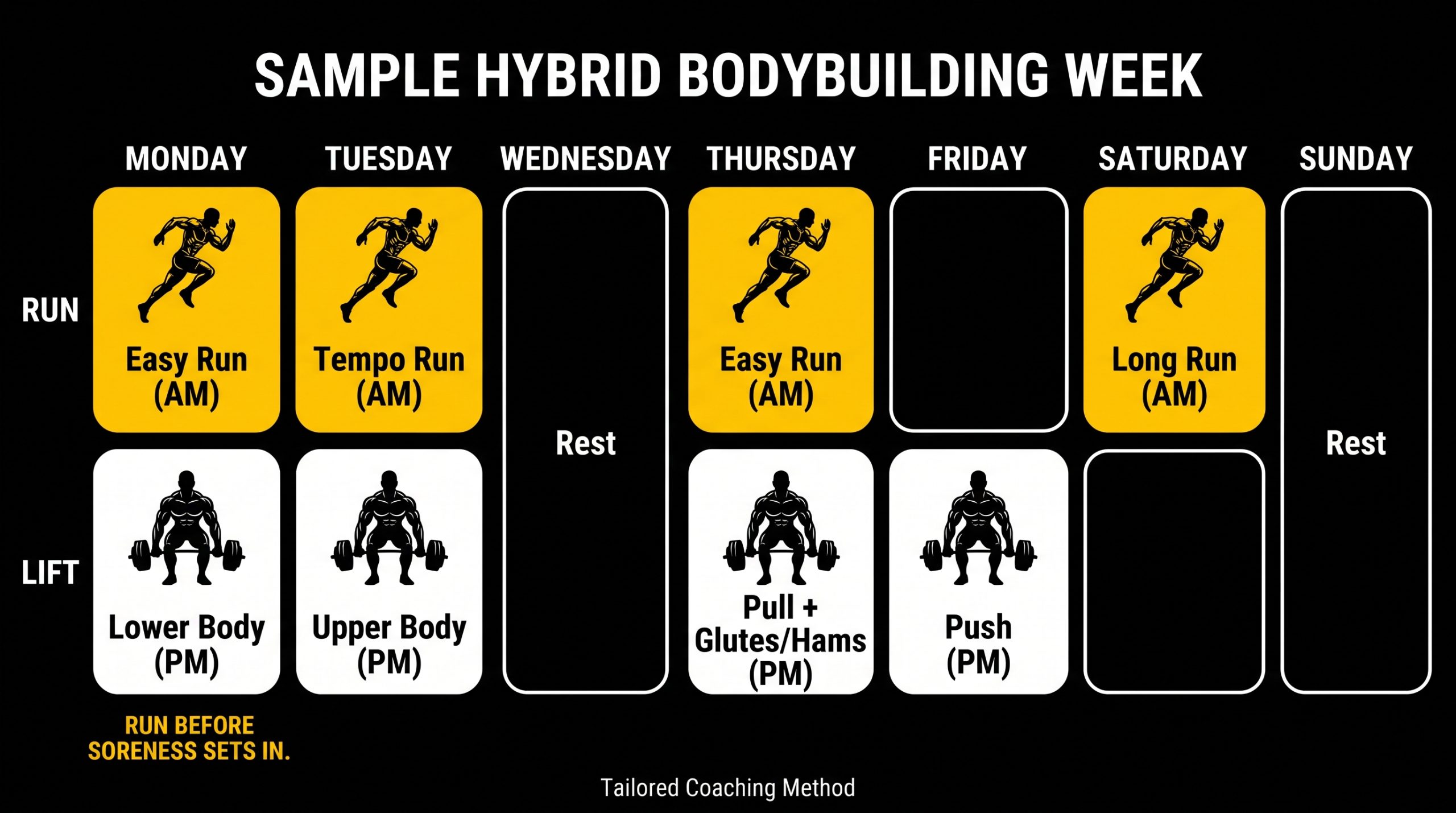
Why tempo lands Tuesday morning: it comes the morning after leg day, before Monday’s soreness has had time to build, and it stacks two demanding sessions so Wednesday can be a true rest day. Same logic for Saturday: keep Thursday’s glute and hamstring work moderate so it isn’t peaking during your long run. One coaching note: if Tuesday’s tempo run feels flat, look at Monday’s quad volume first. Trim the leg session before you touch the run.
Can You Do an Arm Day or Shoulder Day on Easy Run Days?
You can — it won’t drive much systemic fatigue. But a single-muscle day isn’t ideal for your joints or the muscle. Cramming all your arm or delt volume into one session concentrates stress on the same elbows and shoulders. A full push or upper day spreads that volume across more muscles and more of the week.
How Big Should Your Caloric Surplus Be When You’re Running High Mileage?
Smaller than you think. The “eat everything in sight” bulk mostly buys you fat.
In a 2023 study, trained lifters ate at maintenance, a 5% surplus, or a 15% surplus for eight weeks of supervised training. The researchers concluded that faster weight gain — and by extension bigger surpluses — mainly increased fat gain rather than adding muscle thickness or strength (Helms et al., 2023). An earlier study in elite athletes saw the same pattern: a planned surplus of roughly 500–600 calories a day added 1.7 kg of lean mass versus 1.2 kg eating freely (not a significant difference), but 1.1 kg of fat versus 0.2 kg (Garthe et al., 2013).
Plain English: past a modest surplus, extra food stops buying muscle and starts buying fat.
That’s why I set hybrid clients at a 3–5% surplus. Lean toward 3% if you’re patient and want to stay sharp, toward 5% if you want faster gains. The real benefit is time: you can stay in a muscle-building phase longer, and you don’t need a long cut afterward to undo it.
The Running Tax: The Percentage Stays, the Baseline Moves
If you’re burning 800+ calories on a long run day, the 3–5% doesn’t change. Your maintenance number does. A runner’s maintenance is far higher than the lifters in those studies, so 3–5% is applied to a bigger base.
For perspective: if your weekly maintenance including running is 21,000 calories (3,000 a day), a 3% surplus is 630 extra calories a week — about 90 a day. At 5%, it’s about 150 a day. That’s not a bulk. That’s a precision adjustment.
Two Ways to Set It Up
Method 1: The weekly average (simple). Calculate your weekly maintenance including your running burn, add 3–5%, and divide it evenly across the week. Keep macros high-protein, high-carb, moderately low-fat. Why weekly? Digestion, absorption, and glycogen depletion and refill run on a multi-day clock, not a 24-hour one. And for body composition, carb cycling offers little advantage — its real value is sport-specific fueling. For the full macro setup, see our guide to hybrid athlete nutrition.
Method 2: Baseline plus run fueling (what I prefer). Set your daily intake at a 3–5% surplus over maintenance without the runs. Then fuel each run on top of that: a pre-run carb, plus intra-run carbs on longer or harder days, scaled up or down by distance and intensity. Use the same foods every time — only the amounts change. In my experience, it’s simpler not to track those run carbs at all. Track your baseline, nail it, and add the run fuel by the numbers. The full calculations are in our guide to intra-workout fueling for hybrid athletes.
Why I like Method 2: carbs land when they’re actually used, gut distress drops, and tracking stays dead simple on days your training changes.
How Should You Periodize Lifting and Running Across the Year?
For hypertrophy, less than you’d expect. Periodization helps you progress mileage and peak strength, but a 2022 meta-analysis of volume-equated programs found periodized and non-periodized training produced similar muscle growth (Moesgaard et al., 2022). Progressive overload and recoverable volume do the heavy lifting.
So the question becomes how you split your total training volume between the two disciplines:
→ The patient, year-round approach: roughly 50/50. Build up slowly until you find the highest volume you can sustain week over week, then progress both. In my experience, and based on the research, I still tilt it slightly toward lifting — about 5–10% more volume to the weights than to running.
→ The goal-driven approach: the 2/3 rule. If one goal matters more right now, give it two-thirds of your volume and keep the other on one-third maintenance. Race coming up? Lifting volume drops and running climbs. Physique show coming up? The reverse.
Why is a third enough to hold onto the other quality? Because maintaining an adaptation takes far less work than building it. One study found young adults kept their muscle size on as little as one-ninth of their original training volume for 32 weeks (Bickel et al., 2011). Adults over 60 needed more, so age matters here.
The Hybrid Bodybuilding Playbook at a Glance
| Variable | The bodybuilding approach | Why it works |
|---|---|---|
| Exercise selection | Pendulum squats, leg presses, chest-supported rows, unilateral work instead of heavy barbell squats, deadlifts, and rows | Same muscle tension, far less spinal compression and nervous system fatigue |
| Lower-body volume | Moderate direct quad and calf work; more glute and hamstring volume | Offsets running’s quad dominance and helps knees and hips hold up |
| Proximity to failure | 0–1 reps in reserve on machines and cables; leave reps in the tank on free-weight compounds | Growth-level effort without the 24–48-hour recovery hangover |
| Conditioning | Swap select easy runs for cycling, sled work, rowing, or SkiErg | Aerobic work with much less eccentric loading and impact |
| Split | One primary leg day, three upper days, runs paired with leg day | Protects leg recovery and keeps soreness off key runs |
| Calories | 3–5% surplus over maintenance, with run fuel added separately | Muscle gain without excess fat or gut issues |
Frequently Asked Questions
Can you build muscle while running 20+ miles a week? Yes. Concurrent training research shows meaningful muscle growth is still possible alongside endurance work, especially when part of the conditioning is cycling or other low-impact work. The key levers are exercise selection that spares the spine, sets taken close to failure on lower-risk lifts, a leg-day-friendly schedule, and a modest caloric surplus.
Does running count toward leg volume for hypertrophy? No. Running doesn’t provide the high mechanical tension or loaded stretch that drives muscle growth, so count your hypertrophy sets separately from your miles. Running does count toward total fatigue, though, so higher mileage means your gym leg volume needs to be managed carefully.
Is cycling better than running for building muscle? For preserving muscle growth, cycling interferes less. A 2012 meta-analysis found running, but not cycling, significantly reduced hypertrophy and strength gains, likely because running’s landing phase causes eccentric muscle damage. If you’re a runner with race goals, keep your key runs and swap some easy miles for cycling, sled work, rowing, or the SkiErg.
How much training volume do you need to build muscle if you’re also running? The volume needed to grow doesn’t change because you run — the same weekly set landmarks apply. What changes is how much you can recover from. Work up your weekly volume gradually, eat enough calories and carbs to recover, and lower the fatigue cost of each set by choosing machines and isolation work over heavy barbell compounds.
What caloric surplus do hybrid athletes need to build muscle? A 3–5% surplus over maintenance is enough for trained lifters to build muscle while limiting fat gain. Running raises your maintenance, not the percentage, so the surplus is calculated from a higher baseline. Fueling long or hard runs with extra carbohydrates on top of that baseline keeps tracking simple.
The Bottom Line
You don’t have to quit running to look muscular. And you don’t have to look under-muscled to run well. Strip out the barbell dogma, respect your recovery budget, put your hardest effort into the lifts that cost the least, and you can build a real bodybuilder’s physique while logging serious miles.
It’s not easier. It’s just smarter about where the hard work goes.
Blunt plug, but if you want the volume split, exercise swaps, and fueling numbers built around your body, schedule, and that one knee that talks back, that’s literally what our coaches do. Apply for 1-on-1 online coaching here.