
This guide is a monstrous piece of content because, as I’ve reflected on my own experience over the last 12 months, I’ve realized there is so much more to this than just running and lifting. Hybrid training has become a buzzword, but there is a right way and a very destructive way to do it. If you want to perform well, look athletic, and be functional, this is for you. My goal is to define what hybrid training actually is, debunk the myths using real science, and give you a phased approach to building your own plan.
Executive Summary: The Hybrid Athlete TL;DR
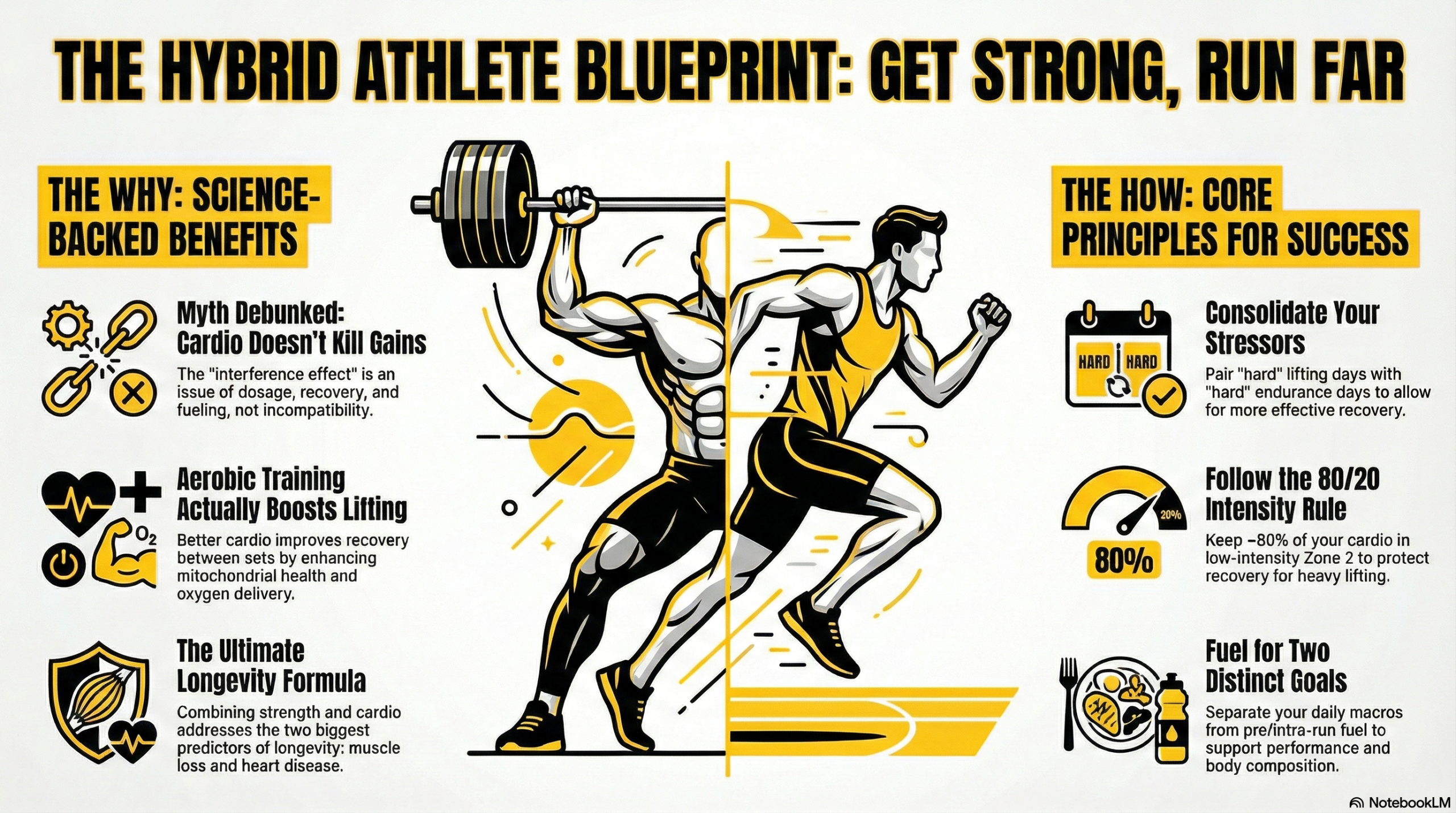
If you want to build muscle and elite endurance simultaneously, you must move past the myth that cardio “kills” gains. Successful hybrid training relies on the High-Low Strategy: clustering high-intensity stressors (heavy lifting and tempo runs) on the same day to allow for 48 hours of systemic recovery . By managing your “Stress Bucket” with polarized training and paying the “Hybrid Tax” through a 20-30% increase in carbohydrate intake, you can bridge the gap between strength and stamina to become a more capable human being.
“What is Hybrid Athlete Training?”
Hybrid athlete training is a methodology designed to build a more capable human being by combining strength training and endurance work simultaneously. By ignoring the myth that “cardio kills gains,” this science-based approach uses a high-low split to improve body composition, cardiovascular health, and longevity without sacrificing explosive power or muscle mass.
And just to further define and explain what hybrid training really is, before we get into the “how-to” of hybrid training, I want to provide a few more definitions from the pioneers who have paved the way for this methodology.

Alex Viada: He defines hybrid training as the act of training for any two sports or activities that don’t inherently support one another.

Nick Bare: For Nick, it’s a fitness philosophy that combines strength training and endurance work to create well-rounded, versatile athletes. It challenges the old idea that you can’t get strong and run well simultaneously.

Cody McBroom (me): Hybrid training is a methodology to become a more capable human being. It’s about being a person who can survive anything and hold their own physically. It instills deep internal confidence and serves as a magnificent tool for eliminating ego and adopting the “Choose Hard” mentality. In the hybrid world, there are no shortcuts or cheat reps—you finish the race or you don’t.
The Hybrid Training Audit: Defining Your Training Bias
Before you start the program, use this 1-5 scale to audit your current capabilities. This audit helps you identify where you have the most “room to grow” and determines if you should start with a Strength-Bias or Endurance-Bias .
Rate yourself honestly (1 = Beginner, 5 = Elite):
| Strength Metrics | Endurance Metrics |
| Absolute Strength: Can you Deadlift 2x bodyweight or Bench Press 1.25x bodyweight? | Aerobic Base: Can you run for 60+ minutes in Zone 2 without needing to walk? |
| Relative Strength: Can you perform 10+ strict pull-ups or 30+ push-ups? | Pacing Skill: Can you run a 5k with less than a 5-second variance in split times? |
| Power/Explosiveness: Can you perform a standing broad jump of 8+ feet? | Capacity: Have you completed a half-marathon or a 2-hour continuous endurance event? |
How to Choose Your Bias:
- The Strength-Endurance Gap: If your Strength score is a 4 but your Endurance is a 2, you are an Endurance-Bias candidate. You need to prioritize aerobic volume to “lift” your baseline.
- The Power-Stamina Gap: If your scores are equal (e.g., both 3s), you should follow a Maintenance/Balanced split .
- The Foundation Rule: If you are a 1 or 2 in both, start with a Strength-Bias. It is easier to layer endurance on top of a strong frame than it is to build muscle on a fragile one .
Part 2: The Hybrid Training, Science-Backed Deep Dive
1. Shattering the “Cardio Kills Gains” Myth
The “interference effect” originally came from early concurrent training studies where endurance volume was excessively high, nutrition was not controlled, and subjects were not lifting with hypertrophy-optimized programming.
The reality is that muscle mass is regulated primarily by net muscle protein balance: Muscle Protein Synthesis (MPS) vs. Muscle Protein Breakdown (MPB). Concurrent training does not shut off MPS. Resistance training still activates mTOR signaling and mechanical tension. As long as your weekly training volume is sufficient, progressive overload exists, and your protein and calorie intake is adequate, muscle can be maintained or grown even with aerobic work layered in.
What this ultimately boils down to, is that the interference effect is more of a “timing and dosage issue” than anything else, which is seen in research studies such as Concurrent Training: A Meta-Analysis Examining Interference of Aerobic and Resistance Exercises, from Journal of Strength and Conditioning Research (JSCR).
2. The Role of AMPK vs. mTOR
Mechanistically, endurance training activates AMPK, a cellular energy-sensing pathway. AMPK is not “bad”—it responds to low cellular energy and improves fat oxidation. The issue only occurs when AMPK activation is chronic and excessive, combined with high training stress without enough recovery. In that specific case, AMPK can temporarily dampen mTOR signaling—but it does not eliminate it. This is a timing and dosage issue, not an incompatibility.
3. How Cardio Actually Builds a Better Lifter
Most lifters underestimate how much aerobic training improves strength and hypertrophy capacity:
- Mitochondrial Health: Aerobic training increases mitochondrial number (biogenesis) and efficiency. More and healthier mitochondria mean faster ATP regeneration and slower onset of fatigue. Because sets in the gym often end due to local fatigue, better mitochondrial function allows you to maintain higher quality output across more total sets.
- Capillarization: Aerobic training increases capillary density around muscle fibers. These tiny blood vessels deliver oxygen and nutrients (glucose and amino acids) to the muscle while removing metabolic waste. In simple terms: your muscles recover between sets and sessions more effectively.
This is idea of aerobic work increasing mitochondrial efficiency, leading to better volume tolerance in the gym, can be backed by the research study titled Mitochondrial Biogenesis in Skeletal Muscle: The Role of PGC-1α, by The American Journal of Physiology.
4. Long-Term Health & Longevity
Doing both beats doing either alone. While strength training excels at increasing lean mass and insulin sensitivity, it does not maximally improve VO2 max. Conversely, aerobic training improves cardiac stroke volume and vascular health but does not preserve muscle mass optimally. Hybrid training addresses both cardiovascular disease risk and functional decline with aging, which is why combined training lowers mortality risk the most.
5. The Critical Vulnerability: Power & Explosiveness
While you can effectively build muscle and endurance together, explosive power is the most interference-sensitive quality. Power relies heavily on neural output, and cumulative fatigue can mask your rate of force development. To protect your “pop,” you must keep your endurance mostly easy, separate hard conditioning from power days, and prioritize power movements at the very beginning of your sessions before fatigue settles in.
Part 3: Mastering the Schedule (The “High-Low” Strategy)
The biggest challenge in “Concurrent Training” is ensuring your leg lifting days don’t ruin your hard running days. To optimize this, we use the High-Low approach: we cluster high-CNS (Central Nervous System) stressors together, followed by low-intensity recovery days. It’s better to be completely exhausted on Monday and fully recovered by Wednesday than to be “kind of tired” every single day of the week.
The Professional Hybrid Split (4-Day Lift / 3-Day Run)
| Day | Workout Type | Focus |
| Monday | Lower Body (Strength) + Tempo Run | High Intensity: Hits the legs hard once, then allows 48 hours of recovery. |
| Tuesday | Upper Body (Hypertrophy) | Moderate: Allows the nervous system to stay active while legs rest. |
| Wednesday | Easy Run (Zone 2) | Recovery: Flushes tissue and builds aerobic base without joint impact. |
| Thursday | Lower Body (Power/Volume) | High Intensity: Primary leg session for the second half of the week. |
| Friday | Upper Body + Mobility | Moderate: Posture, overhead strength, and mobility work. |
| Saturday | Long Run | Endurance: Low intensity, high volume. The “Big Engine” builder. |
| Sunday | Full Rest | Total Recovery: Passive recovery or light walking only. |
The “6-8 Hour Rule” Deep Dive: The Molecular Science of Timing
To optimize a hybrid program, you must respect the molecular signaling pathways of your muscle cells. This isn’t just about feeling rested; it’s about managing the “crosstalk” between two different signals .
- mTOR (The Builder): Resistance training triggers the Mechanistic Target of Rapamycin (mTOR) pathway, which is responsible for muscle protein synthesis and growth .
- AMPK (The Sensor): Endurance training activates Adenosine Monophosphate-activated Protein Kinase (AMPK), which helps with mitochondrial biogenesis and energy efficiency.
Why the 6-8 Hour Gap Matters: When you run immediately after lifting, the elevated levels of AMPK can temporarily dampen or “mute” the mTOR signal. Research from a study titled The AMPK-mTOR Pathway in the Control of Muscle Size and Nutrition, from Frontiers in Physiology or The Journal of Physiology, suggests that after a bout of resistance training, mTOR signaling stays elevated for hours. By waiting 6 to 8 hours (or separating sessions into morning and evening), you allow the initial surge of AMPK to return toward baseline before initiating the other stimulus . This separation ensures that your body isn’t receiving “conflicting” messages, allowing you to maximize the adaptations of both strength and stamina without them stepping on each other.
Part 4: Exercise Selection for the Hybrid Athlete

Your exercise selection must complement your running. While compound movements like Squats and Deadlifts are non-negotiable, the specific variations you choose matter.
Joint-Friendly Compounds:
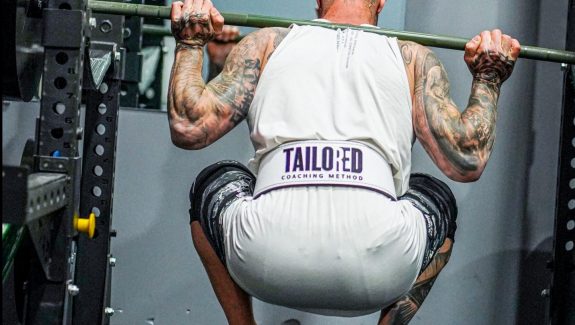
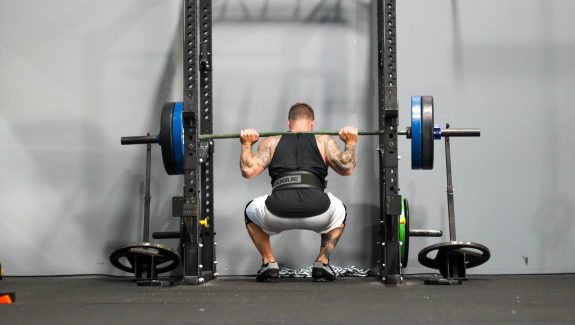
I highly suggest specialty bars like the Safety Bar or Trap Bar. These allow you to progress strength week-to-week without frying your CNS or joints as much as traditional barbell variations.
Unilateral Power:
Lunges, step-ups, and split squats compliment a hybrid athlete more and put less stress on the joints. They fix the imbalances that running often exposes.
The “Gap Fillers”:
Focus on core stability and posterior chain (hamstring/glute) work. Since running is often quad-dominant, training your hamstrings and glutes creates more stability in the knees and prevents injury.
Specific Lower Body Examples:
- Monday (Strength): Trap Bar Deadlifts (3-5 reps) and Bulgarian Split Squats.
- Thursday (Power/Volume): Box Jumps (3-5 reps) performed first to fire the nervous system, followed by Walking Lunges.
Upper Body Hypertrophy & Mobility
To finish out the week, we focus on the upper body and systemic mobility. These sessions are designed to build the “athletic frame” while ensuring your posture doesn’t collapse from the high volume of running.
Tuesday: Upper Body (Hypertrophy Bias)
Focus: Structural balance and muscle growth. By keeping this “moderate” in CNS intensity, we allow the legs to recover from Monday’s “Double”.
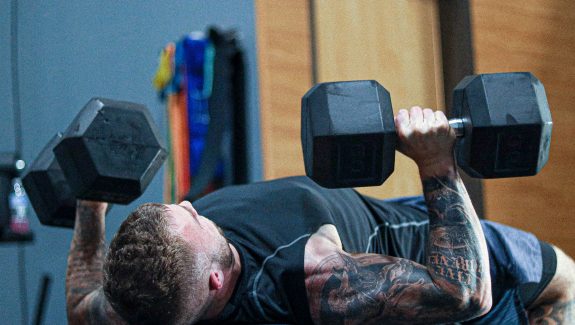
- Primary Push: Incline Dumbbell Bench Press — 3 sets of 8-10 reps. Prioritizing the upper chest helps create that athletic look.
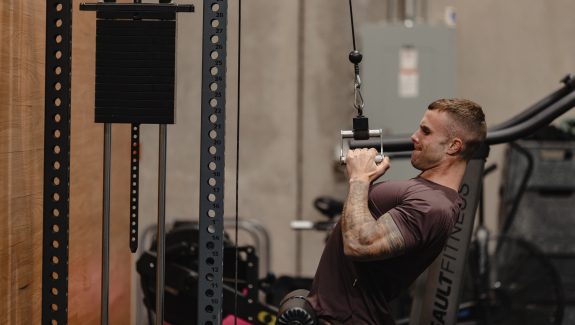
- Primary Pull: Weighted Pull-Ups or Lat Pulldowns — 3 sets of 8-10 reps. A strong back is the foundation for a stable running gait.
- Horizontal Row: Seated Cable Rows — 3 sets of 10-12 reps. Focus on retracting the shoulder blades to counteract “runner’s slouch.”
- Shoulder Health: Dumbbell Lateral Raises — 3 sets of 15 reps. These are “low-tax” isolation moves that recover easily.
- Arm Pump: Alternating Bicep Curls & Tricep Overhead Extensions — 2-3 sets of 12-15 reps.
Friday: Upper Body + Mobility (The “Engine Maintenance”)
Focus: Posture, overhead strength, and preparing for Saturday’s Long Run.
- Vertical Push: Standing Overhead Press (Barbell or Dumbbell) — 3 sets of 8 reps. This challenges core stability while building shoulder strength [cite: 686-688].
- Vertical Pull: Face Pulls — 3 sets of 15-20 reps. Essential for rear delt health and posture.
- Core Stability: Pallof Press — 3 sets of 10 reps per side. [cite_start]Anti-rotation strength is vital for preventing “leakage” of energy while running.
- Hybrid Mobility Circuit: 2-3 rounds (No rest)
- 90/90 Hip Switches: 10 reps per side. Opens up the hips for Saturday’s stride.
- World’s Greatest Stretch: 5 reps per side.
- Thoracic Spine Extensions (on Foam Roller): 10 reps.
- Optional: Walking Lunges (Bodyweight only) — 2 sets of 20 steps. Just enough to “grease the groove” without adding fatigue
**Note: For all the exercises above, you can find demonstration videos on The Tailored Trainer YouTube channel.
Hybrid Gear Guide: Tools for the Two-Way Athlete
Choosing the right gear is about more than comfort; it’s about injury prevention and mechanical efficiency .
- The Lifting Shoe: For your heavy Monday/Thursday sessions, use a flat-soled shoe (like a Chuck Taylor or a dedicated zero-drop lifting shoe) to provide a stable base for force production. Avoid “squishy” running shoes for heavy squats, as they create instability in the ankle.
- The Daily Trainer (Running): For your Wednesday Zone 2 and Saturday Long Runs, choose a neutral, high-mileage trainer. This protects your joints from the repetitive 5-10% weekly volume increases.
- The Carbon-Plated “Super Shoe”: Save these for your Monday Tempo runs or races. While they improve economy, they can be unstable. If you have any history of shin splints or tendonitis, use these sparingly .
- The Recovery Tool: A high-quality heart rate monitor (chest strap) is non-negotiable for the “High-Low” strategy to ensure your easy runs stay “disgustingly easy”..
Part 5: Nutrition and the “Hybrid Tax”
A lot of “hybrid training failures” are actually nutrition failures, not training failures. When you layer endurance work on top of a strength program, you are effectively placing a “Hybrid Tax” on your metabolism that must be paid in calories and specific macronutrients to avoid stalling or hormonal disruption.
Because this is such a heavy topic in it of itself, I dedicated an entire article to Hybrid Athelte Nutrition and I’d highly suggest you head over to that article after finishing this one. However, I’ll give you the brief overview right here in this article for now.
The Caloric Demand
You must understand the massive increase in Total Daily Energy Expenditure (TDEE) that comes with running. I’ve tracked this personally to show the scale of the “tax”:
- Interval/Repeat Runs: A short session of 1k repeats (approx. 2.75 miles) can burn around 243 calories.
- Progressive Runs: A moderate 4.5-mile progressive run, where pace increases throughout, can burn 539 calories.
- Long Non-Paced Runs: A high-volume 11.8-mile run can burn upwards of 1,586 calories.
This additional demand can represent anywhere from 10% to 50% of your maintenance intake. If you don’t adjust your intake, you aren’t just losing fat; you are likely putting yourself in a catabolic state where Muscle Protein Breakdown (MPB) outweighs Synthesis (MPS).
Macronutrient Splitting: The Hybrid Strategy
- Protein: This is your insurance policy for muscle repair. Set your intake at normal muscle-building levels: 0.8–1g/lb of body weight. If you are already lean and training at a high intensity, consider bumping this to 1–1.2g/lb to better protect your existing muscle mass.
- Fats: While fats are necessary for organ health and hormones, research suggests that as little as 7g of fat per day can technically meet basic organ health needs. While we use more than that for hormone support and to make food palatable, fats should be the lowest priority in a hybrid model to make room for more fuel-efficient carbs.
- Carbohydrates: Carbs are the primary fuel for both high-intensity lifting and endurance running. Once your protein and basic fat needs are met, the remainder of your calories should come from carbohydrates.
Intra-Workout Fueling
To avoid “bonking” (running out of glycogen) or muscle catabolism during long sessions, you need a fueling strategy. An endurance athlete can burn 1 to 5g of carbohydrates per minute depending on intensity and experience .
- Pre-Run: 60g of carbs prior to a 30-60 minute run is usually sufficient.
- Intra-Run: If you reach the 45-60 minute mark and still have 25% or more of your distance left, add 20-40g of carbs as intra-fuel.
Body Composition Hack: To keep your physique sharp while fueling performance, keep your daily “base” macros separate from your pre- and intra-run fuel. Fuel the work specifically so that the extra calories are burned during the effort, keeping your fat-loss or maintenance goals on track.
For the full breakdown around intra-workout nutrition and how to optimize your fueling strategy for better performance, check out the intra-workout guide we wrote just for hybrid-athletes.
Part 6: Common Pitfalls & How to Avoid Them
Hybrid training is a high-stakes game. If you ignore the nuance, you’ll likely end up in a cycle of overuse injuries and frustration. In fact, there are A LOT of mistakes made and in this article here, I merely skim through a handful of common ones that are easy to point out. But because a Hybrid Training Program is so easy to mess up, and so many influencers online do just that… I wrote an entire article breaking down the 6 most important mistakes for you to know about and avoid at all costs. You can read it right here; 6 Mistakes Lifters Make When Switching To Hybrid Training.
The “Too Much, Too Soon” Trap
This is the fastest way to develop shin splints, tendonitis, or stress fractures. You cannot jump from zero running to 20 miles a week while maintaining a 4-day lifting split.
- Progression: Limit running volume increases to 5-10% per week.
- Deloading: Every 4 weeks, you should taper back your volume to allow your joints and Central Nervous System (CNS) to recover.
- Specialty Equipment: Use specialty bars (like a Safety Bar) and exercises that don’t “fry” your CNS as much but still allow for weekly tonnage progression.
Ignoring the Taper
Deloads for a hybrid athlete must be individualized. You have to pay attention to your own cadence and autoregulate based on your recovery demands. If you feel lethargic, slow, or have brain fog, it’s a sign of neurological fatigue, even if your muscles aren’t particularly sore.
The Ego Trap
This is the hardest hurdle for most lifters. You must know when to dial back a run to save a heavy squat day, or vice-versa. Your ego will tell you to push through every session, but your body needs you to stick to the plan. In the hybrid training realm, ego is not allowed. Listen to your body and prioritize consistency over a single “hero” workout .
Summarizing The Hybrid Training Model:
Hybrid training doesn’t dilute adaptation—it multiplies it when it’s dosed, fueled, and structured correctly. By following this step-by-step phased approach, you can bridge the gap between strength and endurance to become the most capable version of yourself.
Next Steps For Your Hybrid Training Journey:
If you want to see exactly how I structure these sessions, click the link below to download my Hybrid Training Guide for a single written document containing all the strategies, steps, and scientific research discussed today. Alternatively, if you want a entirely Tailored Coaching plan for your body, your lifestyle, and your performance goals, apply for our 1-on-1 coaching program, here!

Frequently Asked Questions About Hybrid Training (FAQ)
Will cardio kill my muscle gains?
No. Research into concurrent training shows that as long as your nutrition is controlled and your training volume is sufficient, you can maintain or even grow muscle while building endurance. The “interference effect” is primarily a result of poor recovery, inadequate fueling, and improper session timing rather than an inherent incompatibility between lifting and running.
What is the best weekly split for a hybrid training program?
For most serious amateurs, a 4-day lifting and 3-day running split is the “sweet spot”. This involves two heavy lower-body days (Monday and Thursday) clustered with your high-intensity runs, two upper-body days, and a long-duration endurance session on the weekend. This structure ensures your Central Nervous System (CNS) isn’t “fried” by daily low-level fatigue.
How many calories do hybrid athletes need?
Hybrid athletes face a significant “Hybrid Tax” on their metabolism. Depending on the distance, a single run can increase your daily caloric needs by 250 to over 1,500 calories. To support performance and muscle retention, protein should stay at 0.8–1.2g/lb of body weight, with the majority of remaining calories coming from carbohydrates to fuel the high glycolytic demand .
How do I prevent injuries while lifting and running?
The most common pitfall is the “Too Much, Too Soon” trap. You should limit running volume increases to 5-10% per week and utilize joint-friendly lifting variations like Trap Bar Deadlifts or Safety Bar Squats. Additionally, prioritizing posterior chain work (hamstrings and glutes) helps stabilize the knees against the repetitive impact of running
|
|
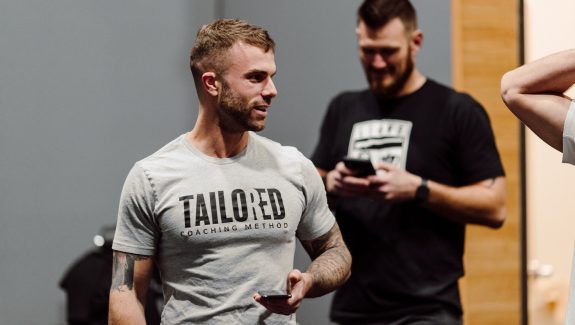
Cody McBroom is the founder of the Tailored Coaching Method, a world-class online coaching platform that has helped thousands of individuals bridge the gap between science and sustainable body transformation. With over a decade of experience transitioning from the gym floor to the digital space, Cody combines formal certifications with the practical expertise gained from coaching hundreds of clients through complex physique and lifestyle goals. He is also the host of the Choose Hard Podcast, a Top 1% podcast on Apple and Spotify, where he provides evidence-based education to a global audience dedicated to long-term health. |