
No. Hormones cannot stop a true calorie deficit from producing weight loss — energy balance follows conservation of energy. What hormones can do is lower how many calories you burn, hide fat loss behind water weight, and push you to eat more, which can shrink or erase the deficit you think you’re in.
Here’s the tension with this topic. If you’ve been grinding in a deficit for six weeks, tracking every gram, and the scale won’t budge, it feels like your body is the exception. And the internet is happy to confirm it: your hormones are “off,” your thyroid is “sluggish,” your cortisol is “blocking fat loss.”
Some of that is grounded in real physiology. A lot of what gets sold off the back of it isn’t.
I’ve coached over 2,000 clients in 16+ years, and “I think it’s my hormones” is something I hear constantly when a cut stalls. Sometimes there is a hormonal piece. But in nearly every case, the hormone isn’t breaking the deficit — it’s quietly changing the math underneath it. That distinction changes what you should do next.
What Hormones Can (and Can’t) Do to a Calorie Deficit
Let’s kill the myth cleanly first.
Your body weight changes based on energy in versus energy out. That’s not a fitness-industry opinion. In a 2022 paper in the American Journal of Clinical Nutrition, Kevin Hall and a group of leading obesity researchers laid out the energy balance model in detail, and a 2024 review in Nature Metabolism by Magkos and colleagues reinforced the same foundation: the human body obeys conservation of energy like everything else in physics.
Plain English: hormones don’t sit outside the equation as a third force. They act on the equation — mostly on the Calories Out side, and through appetite, on the Calories In side.
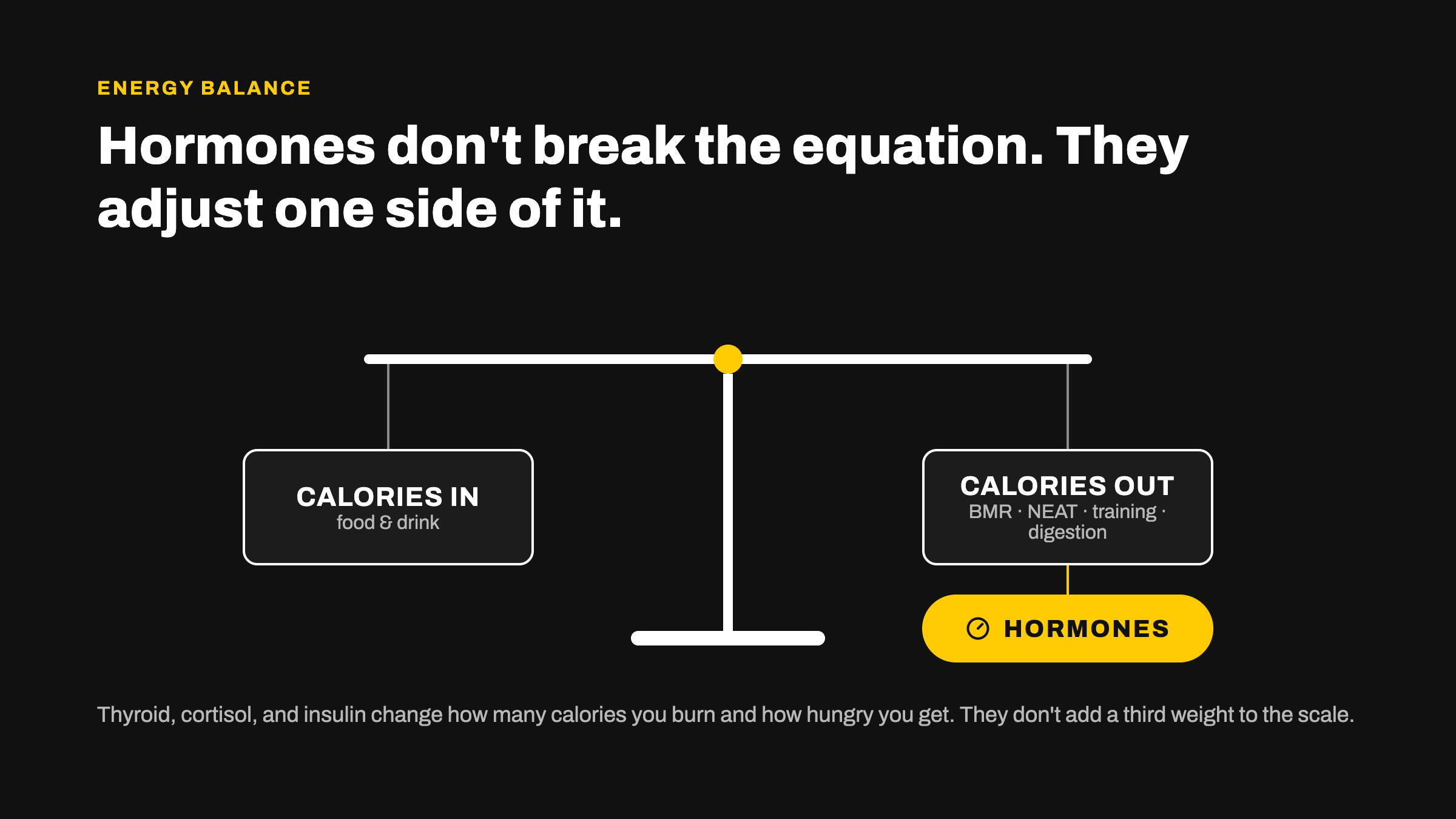
So the question isn’t “can hormones stop my deficit?” It’s “are hormones making my real deficit smaller than I think?” That one has a more interesting answer.
What Happens When “Diet-Resistant” People Get Measured?
Before we get into specific hormones, this study should be required reading for anyone convinced their metabolism is broken.
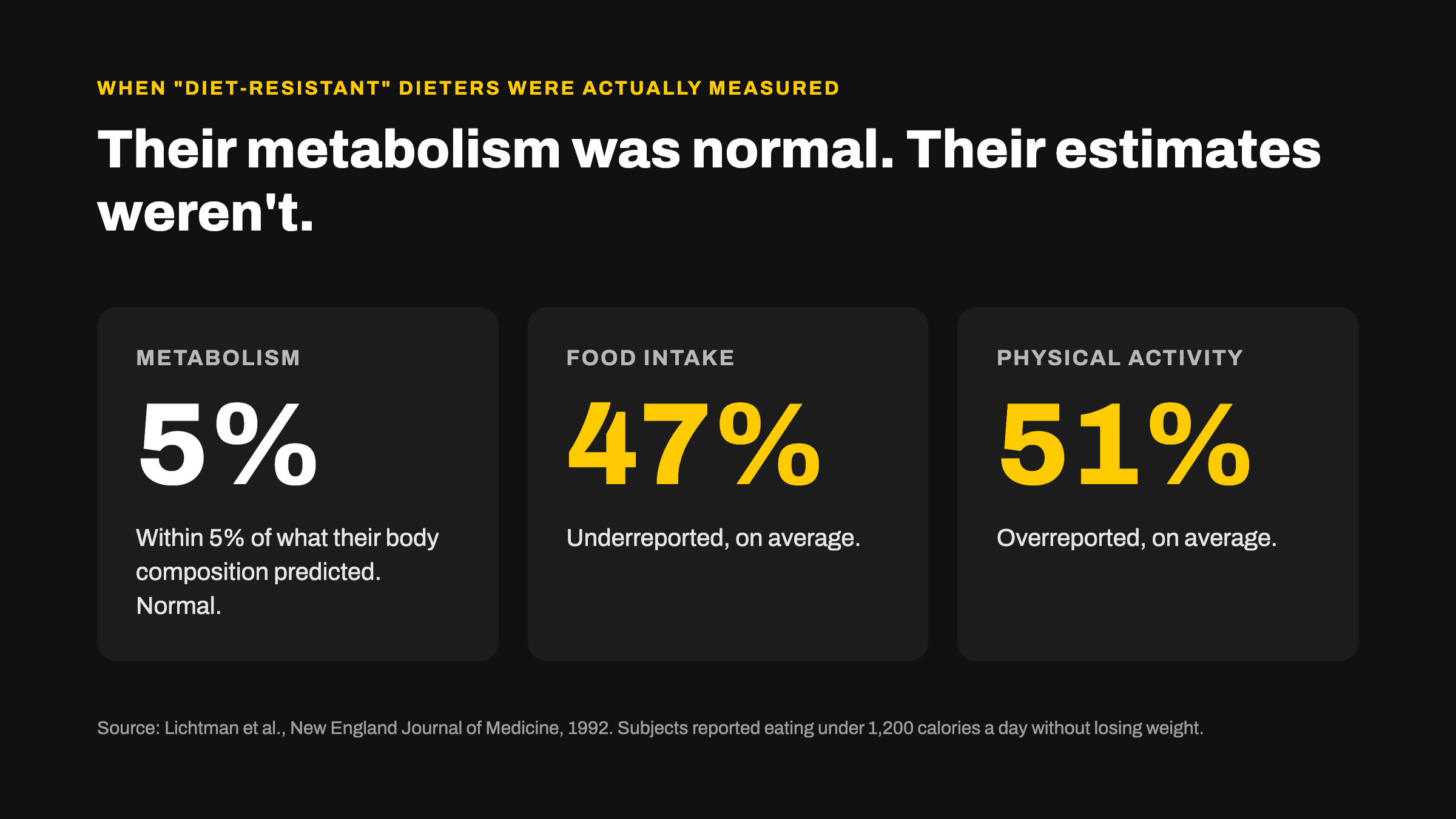
In a 1992 study in the New England Journal of Medicine, Lichtman and colleagues took people who reported eating under 1,200 calories a day without losing weight — self-described “diet-resistant” dieters — and measured everything directly.
→ Their total energy expenditure and resting metabolic rate were within 5% of what their body composition predicted. Normal.
→ They underreported what they ate by an average of 47%.
→ They overreported their physical activity by an average of 51%.
And here’s the detail that matters for this article: that group was more likely to be taking thyroid medication and more likely to believe their weight had a biological cause.
This isn’t about calling anyone a liar. These were people who believed their own numbers. Estimating intake by eye, forgetting cooking oils, “bites and tastes,” weekend drift — that’s how a 47% gap happens to honest, disciplined people. I see versions of it every single month in client check-ins.
Why does this matter? Because if the metabolism is normal and the intake estimate is off, no hormone protocol on earth fixes that.
How Hypothyroidism Affects Weight Loss
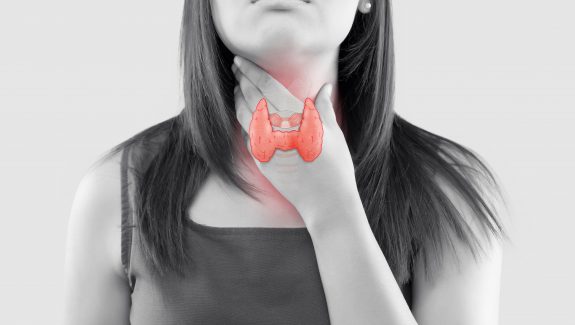
Now, the real hormonal piece. Your thyroid produces T3 and T4, which set the pace at which your cells burn energy. When the thyroid underproduces (hypothyroidism), resting metabolic rate drops.
How much? It depends on severity. In a 2010 study by Karmisholt and colleagues, patients with overt hypothyroidism saw resting energy expenditure rise about 11.6% (roughly 215 calories a day) after a year of treatment. Severe, long-untreated cases can run lower still.
Here’s how that plays out in a case shape I see with coaching clients:
The math on paper: Every app agrees she burns about 2,000 calories a day. She eats 1,600. That’s a 400-calorie deficit — close to a pound a week.
The math in reality: She has significant, undiagnosed hypothyroidism, and her true maintenance is closer to 1,500. She’s eating 1,600. She isn’t in a deficit at all — she’s about 100 calories over maintenance.
She’s not failing the deficit. The deficit was never real.
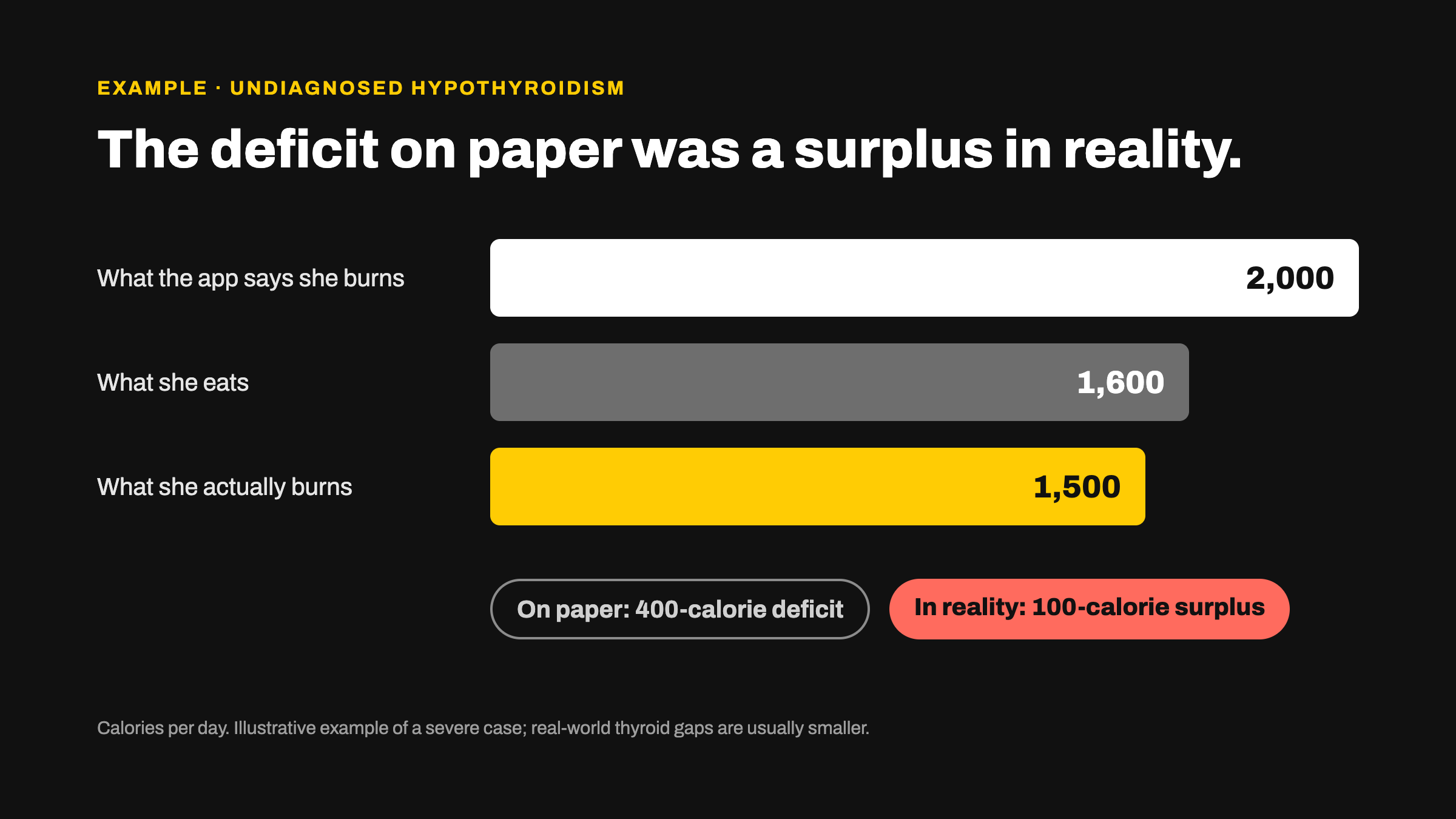
That’s an extreme example on purpose. For context, the American Thyroid Association puts thyroid-related weight gain at roughly 5–10 pounds, depending on severity, and states that the bulk of it is retained salt and water. The Karmisholt study backs that up: after treatment, patients lost about 4.3 kg, but fat mass barely moved — the drop was mainly fluid.
So, two honest takeaways:
→ Hypothyroidism is real, it lowers energy expenditure, and it’s worth getting tested if you have symptoms (fatigue, cold intolerance, dry skin, constipation, hair thinning).
→ Treating it usually corrects a modest gap. It doesn’t unlock a hidden 30-pound fat loss.
Why your TDEE calculator might be lying to you (even with a healthy thyroid)
You don’t need a thyroid problem for your calorie target to be wrong. Online TDEE calculators run on prediction equations built from population averages.
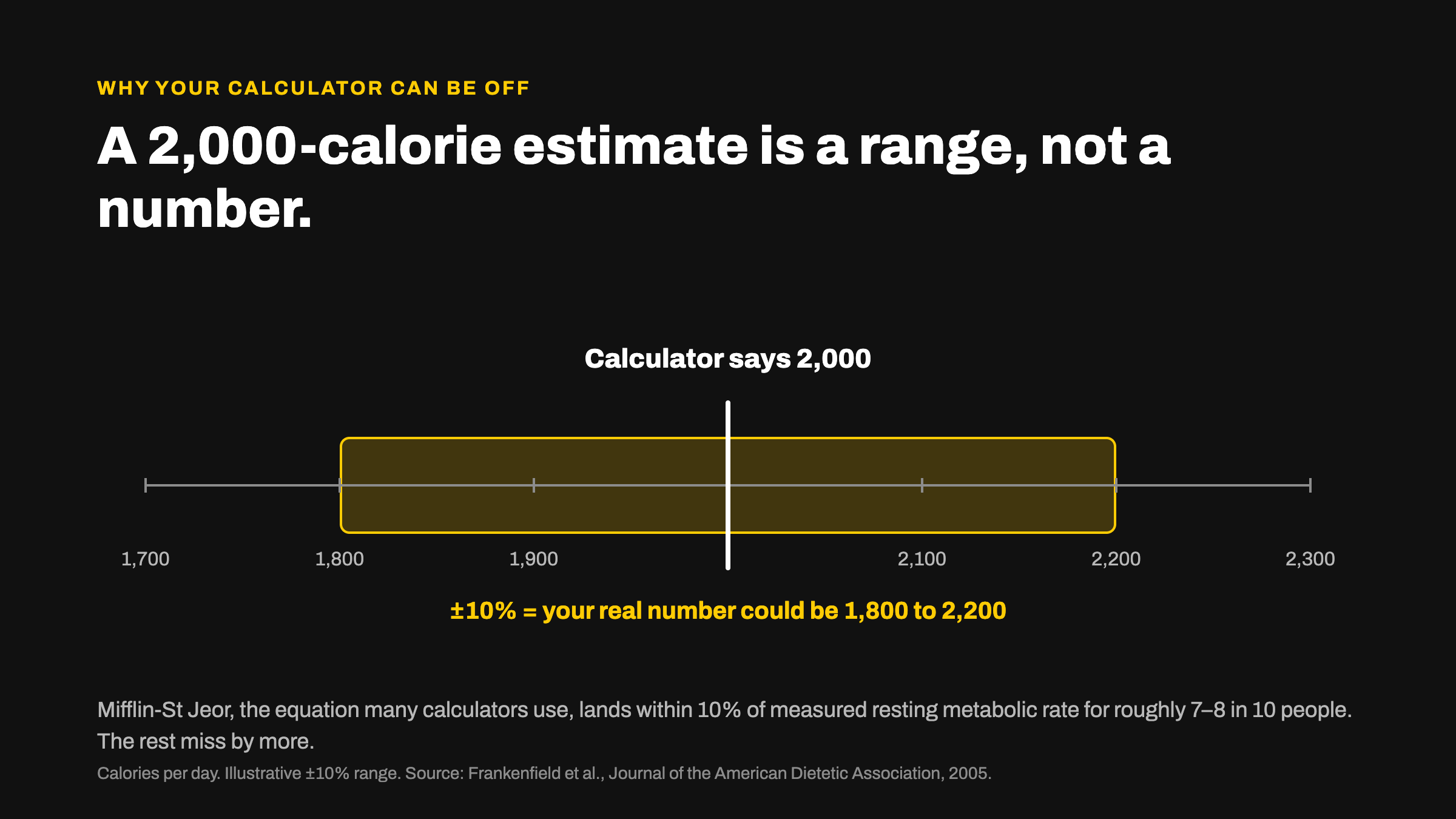
A 2005 systematic review by Frankenfield and colleagues found that the Mifflin-St Jeor equation — the one many calculators use — predicted resting metabolic rate within 10% of measured values for roughly 7 to 8 out of 10 people. Flip that around: 2 or 3 out of 10 are off by more than 10% before activity multipliers add their own error.
On a 2,000-calorie estimate, 10% is 200 calories. Stack that with a modest intake-tracking gap and a 400-calorie “deficit” can disappear completely. (If you want the bigger picture on what does and doesn’t move your metabolism, I break that down in Metabolism Myths.)
Does Cortisol Stop Fat Loss?
Cortisol is your primary stress hormone, and it gets blamed for everything from belly fat to stalled cuts. Here’s what it actually does in a typical, stressed-out but otherwise healthy person.
1. It hides fat loss with water.
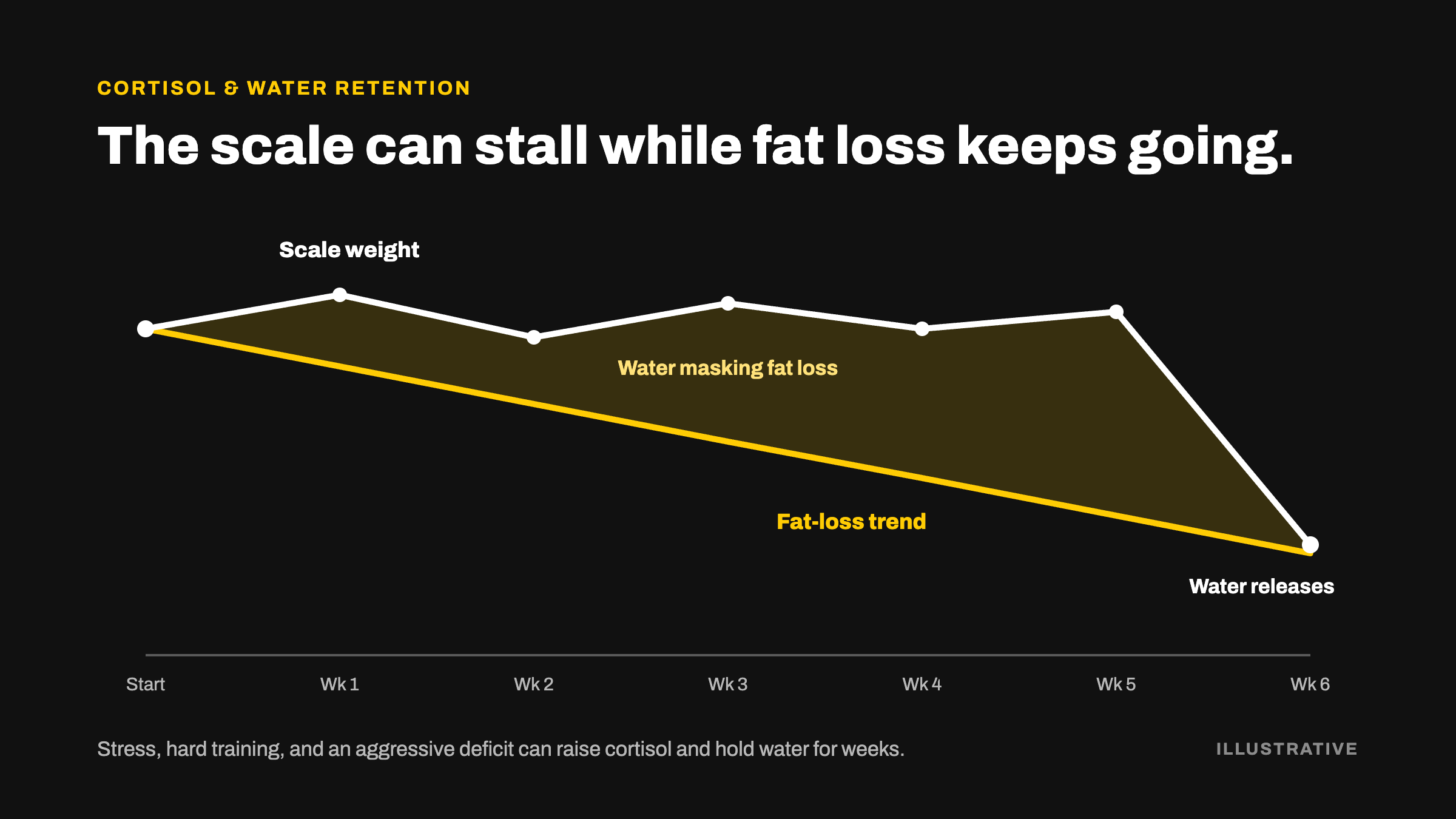
Cortisol has mineralocorticoid effects at higher levels, meaning it can push your body to hold onto sodium and water. Chronic stress, hard training, poor sleep, and an aggressive deficit all raise it. The result: you can be losing fat while the scale sits flat for one, two, even three weeks — then drop several pounds overnight when the water releases. (Lifters call it the “whoosh.” It’s not magic, it’s fluid.)
2. It makes the deficit harder to hold.
Stress is tightly linked to cravings and eating for comfort, especially for hyper-palatable food. Cortisol doesn’t add fat out of thin air — it weakens your ability to say no. And the surplus created by the caving is what does the damage.
So cortisol creates two different problems that look identical from the outside: a deficit you can’t see on the scale, and a deficit you can’t stick to. One needs patience; the other needs a better plan for stress. (Deeper dive here: How Stress Impacts Your Body Composition.)
The honest caveat: true hypercortisolism — Cushing’s syndrome — is a medical condition that does drive significant fat gain and requires a physician. It’s rare, and it comes with distinctive signs (purple stretch marks, rounding of the face, easy bruising, muscle weakness). Everyday work stress isn’t Cushing’s.
Does Insulin Resistance or PCOS Stop Weight Loss?
Insulin moves nutrients into cells. With insulin resistance, cells respond poorly to it, and the body has a harder time switching between burning carbohydrate and burning stored fat. It’s common in polycystic ovary syndrome (PCOS), and women with PCOS genuinely do have a harder road.
But “harder” doesn’t mean “broken metabolism.” When researchers pooled the studies that directly measured basal metabolic rate in women with and without PCOS, there was essentially no difference between groups. The metabolism wasn’t the problem.
So where does the struggle come from? Two places I see constantly:
1. Appetite. Many women with insulin resistance and PCOS report stronger hunger and cravings, and in my coaching experience that’s where adherence breaks down first — not in the metabolism.
2. Energy and movement. When energy tanks, NEAT drops. NEAT — non-exercise activity thermogenesis — is everything you burn outside of training: walking, fidgeting, pacing on calls, taking the stairs. It can swing by hundreds of calories a day, and when you’re drained, it falls without you ever deciding to move less. It just feels like being tired.
One correction worth making, because the causality gets flipped constantly: for the majority of people, insulin resistance isn’t what started the weight gain. Excess body fat, inactivity, poor sleep, and chronic stress are major drivers of insulin resistance. The relationship can feed itself in both directions, but if you blame the hormone alone, you miss the levers that actually improve it — losing fat, lifting, walking more, and sleeping enough all improve insulin sensitivity.
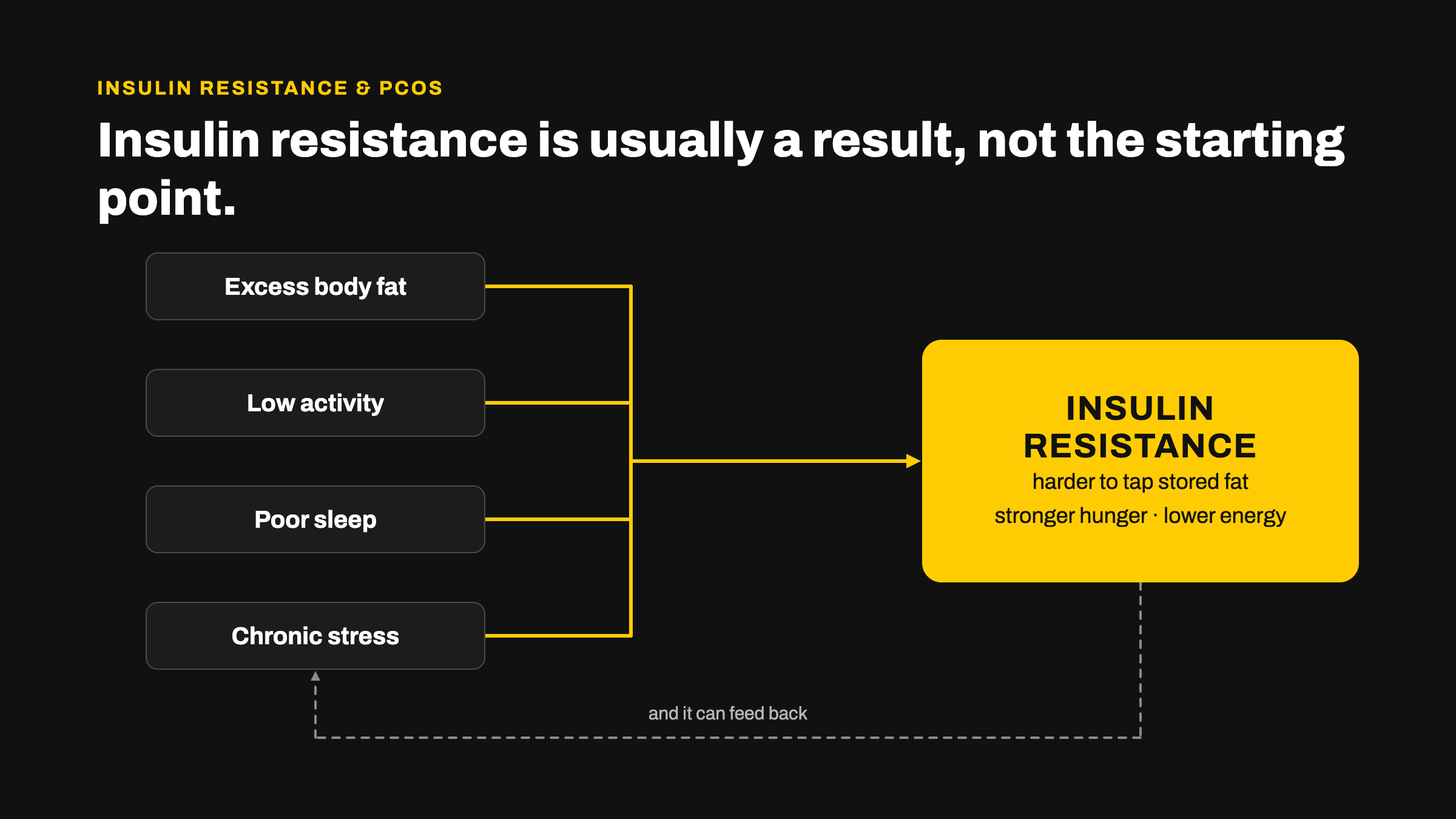
That’s the pattern across all three hormones: every one of them works by shrinking Calories Out or inflating Calories In. None of them repeals the law.
Why Eating Less Makes a Hormonal Stall Worse
This is where people go from frustrated to actually stuck.
When the scale stalls, almost nobody questions the estimate. They question the amount — and cut harder. 1,600 becomes 1,300. Then 1,100.
Wrong move.
Your body doesn’t sit still while you cut calories. It adapts. This is metabolic adaptation (also called adaptive thermogenesis): your energy expenditure drops further than your weight loss alone would predict.
→ In a classic 1995 NEJM study, Leibel, Rosenbaum, and Hirsch found that after people lost 10% of their body weight, their total energy expenditure fell well below what their new, smaller body predicted — and much of that drop came from non-resting expenditure, like daily movement.
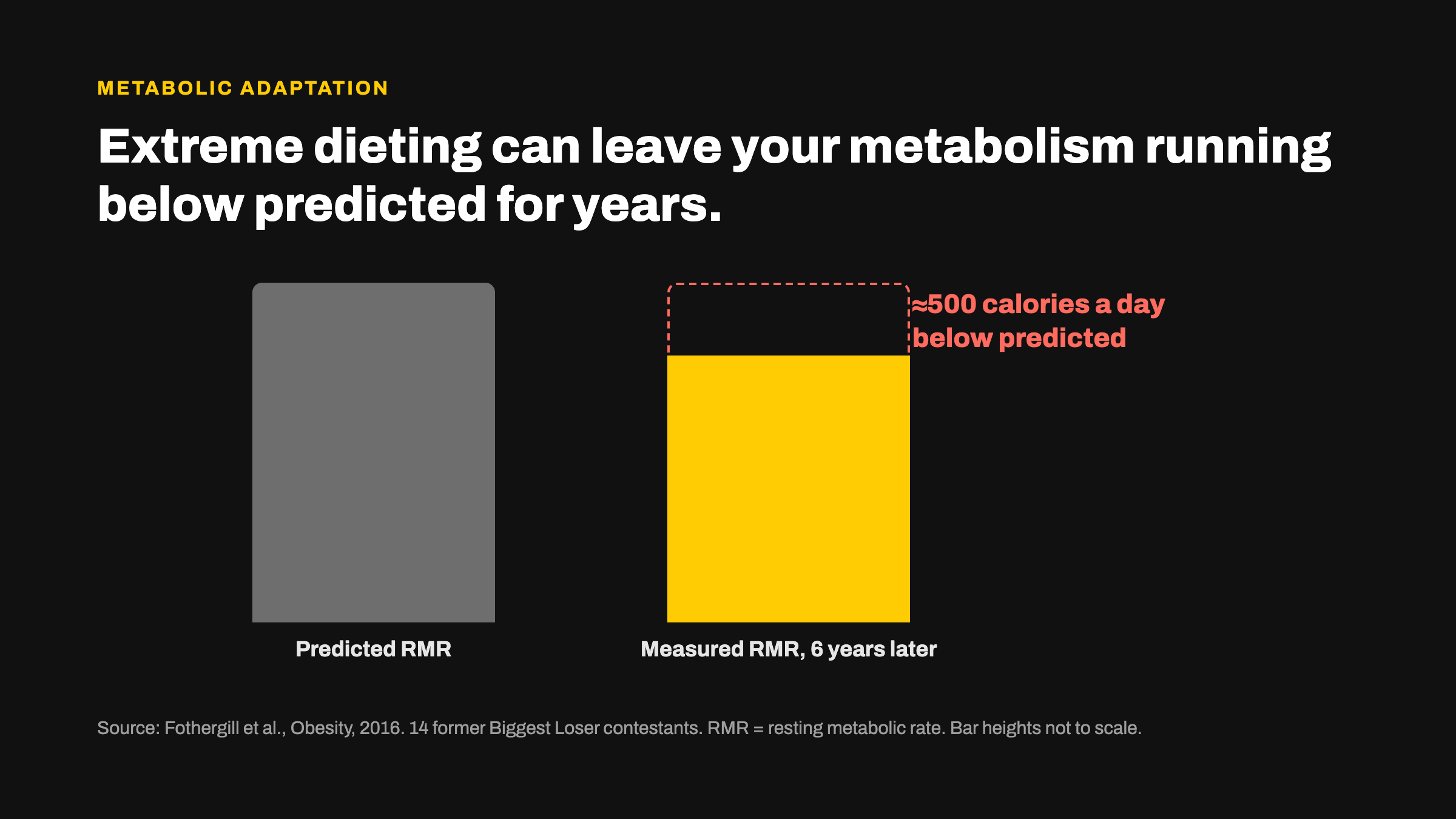
→ In Fothergill et al. (2016), former Biggest Loser contestants who lost weight through extreme restriction and training still had resting metabolic rates roughly 500 calories a day below predicted six years later.
And a deeper deficit on top of an already-stressed system piles on: lower thyroid output, higher cortisol, worse sleep, crushed NEAT, and a bigger risk of losing muscle — the tissue that’s metabolically expensive to keep.
That’s why a stalled cut isn’t solved by a smaller number. It’s solved by a more accurate number, and sometimes by stepping out of the deficit entirely for a while. (I go through how to do that in Reverse Dieting vs. Recovery Dieting.)
How to Fix a Stalled Deficit When You Suspect Your Hormones
This isn’t eighteen supplements from someone with an affiliate link. It’s not a detox, and it’s not whatever protocol went viral last week. It’s boring and it takes effort — and it’s what I’ve seen move stalled clients for 16 years.
1. Rule out the medical piece first.
If you have real symptoms — persistent fatigue, cold intolerance, irregular cycles, hair loss — get bloodwork through your doctor (TSH and free T4 for thyroid; fasting glucose, insulin, or HbA1c for insulin resistance). If something’s off, treat it. That’s step one, not the whole plan.
2. Audit your intake honestly for two weeks.
Weigh food on a scale. Log oils, sauces, drinks, and bites. Log weekends exactly like weekdays. Given the Lichtman data, this is a high-return step for anyone who feels “stuck.”
3. Judge progress by trend, not the daily scale.
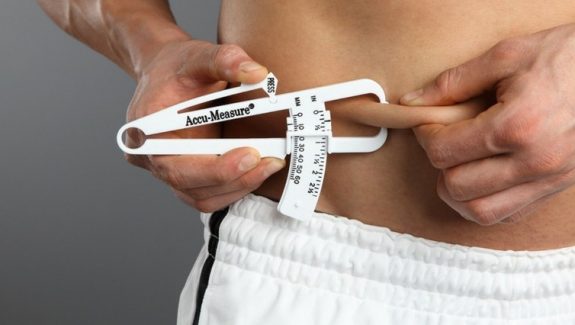
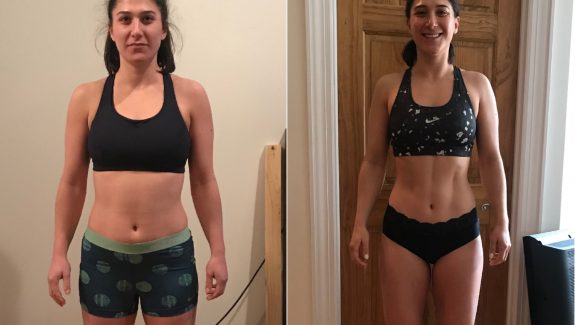
Weigh daily under the same conditions and look at weekly averages over 3–4 weeks. Add waist measurements and photos. Water from cortisol, sodium, and your cycle can mask fat loss for weeks; a trend line can’t be fooled by a single bad Tuesday.
4. Find your real maintenance from your own data.
If your intake is accurate and your weight trend is flat for 3–4 weeks, that intake is your current maintenance — whatever the calculator said. Build the deficit from that number, not the estimate.
5. Protect NEAT with a step floor.
Set a daily step minimum and hit it every day. It keeps one of the biggest, quietest variables in your energy expenditure from sliding when you’re tired.
6. Fix sleep and manage your output.
Sleep, training volume, work stress, and deficit size all draw from the same recovery budget. Burning the candle at both ends while running an aggressive cut is a recipe for higher cortisol, more water retention, and more cravings.
7. Lift and eat enough protein.
Resistance training plus adequate protein (around 0.7–1 g per pound of goal body weight is a common range) helps you hold onto muscle during a deficit, which protects your metabolism and improves insulin sensitivity.
If you’re already disciplined, already tracking, already doing everything “right” on paper — and it’s still not clicking — that’s rarely a willpower problem. It’s usually a precision problem. Blunt plug, but if you want that precision built around your numbers, your hormones, and your life, that’s exactly what our coaches do.
Frequently Asked Questions |
Can hormones stop you from losing weight in a calorie deficit?No. A true calorie deficit produces weight loss regardless of hormones, because the body follows conservation of energy. Hormones like thyroid, cortisol, and insulin can lower how many calories you burn or increase appetite, which can shrink or erase the deficit you think you’re in — but they can’t cancel a real one. |
How much weight can hypothyroidism cause?The American Thyroid Association estimates about 5–10 pounds of weight gain may be related to an underactive thyroid, depending on severity. Much of that is retained salt and water rather than fat, which is why treatment often produces a modest drop on the scale but little change in fat mass. |
Does cortisol make it harder to lose belly fat?In healthy people, everyday stress doesn’t directly pack fat onto your midsection. Elevated cortisol can cause water retention that masks fat loss on the scale, and it’s linked to stress-driven cravings that make a deficit harder to stick to. True hypercortisolism (Cushing’s syndrome) is a rare medical condition that does cause significant fat gain and needs a physician. |
Does PCOS slow your metabolism?Studies that directly measured basal metabolic rate have found essentially no difference between women with and without PCOS. PCOS does make weight loss harder through insulin resistance, stronger hunger, and often lower daily energy and movement, so it calls for a more individualized plan — not a lower calorie target. |
Why am I not losing weight in a calorie deficit?Frequent causes are underestimated intake, an overestimated TDEE, water retention masking fat loss, and a drop in daily movement (NEAT) as energy falls. Track intake precisely for two weeks, judge progress by a 3–4 week weight trend, and use that data to find your real maintenance before cutting further. |
The Bottom Line on Hormones and Your Calorie Deficit
A true calorie deficit works — that’s physics, not a promise. What hormones can do is shrink your real metabolic target into a small, easy-to-miss window — and make it harder to see and harder to stay in.
The fix isn’t a harder deficit. It’s an accurate one: rule out the medical issues, get honest about intake, read the trend instead of the day, and manage the stress and sleep that feed the whole system.
No shortcuts. Just better data and the discipline to act on it.