
Glute Training For Real Growth: The 5 Program Design Levers That Actually Work
If your glutes have stalled, the problem usually isn’t your diet or your cardio — it’s your training. Glute training that actually drives growth comes down to five program design levers: (1) training closer to failure, (2) using a full (or exaggerated) range of motion, (3) raising frequency, (4) increasing glute-specific volume, and (5) varying exercises across every function of the hip. Pull those five correctly, and a stalled muscle group starts responding again.
Why Your Glutes Actually Stop Growing
Most people treat a stalled muscle group like an energy balance problem. Eat more calories so there’s “more to build with.” Do less cardio so you’re not “burning off” gains. Or go the other direction — cut calories and add cardio to “reveal” the muscle that’s supposedly already there.
That second version makes sense if the actual goal is fat loss. But neither direction builds new muscle tissue. You can’t eat your way to bigger glutes any more than you can eat your way to bigger biceps. Energy balance determines whether you’re building or losing tissue overall — it doesn’t determine whether a specific muscle is getting the training stimulus it needs to grow. Only a training fix does that.
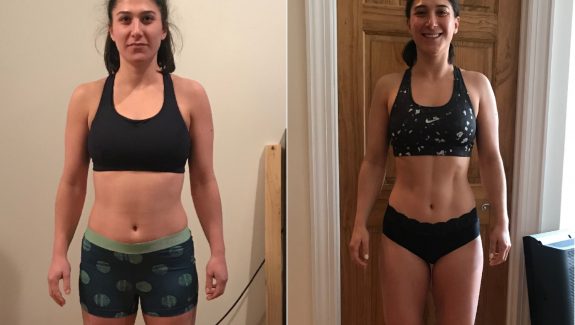
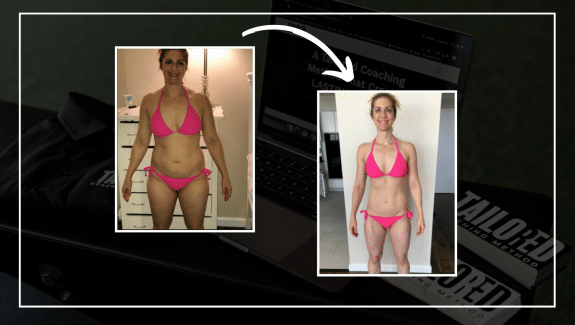
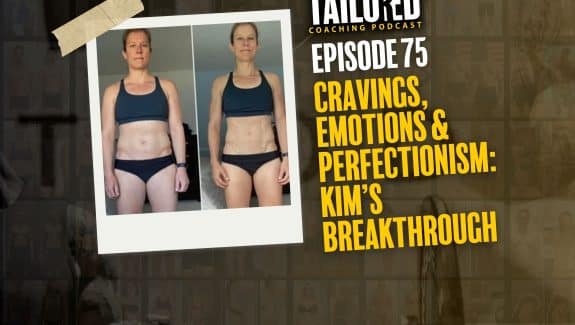
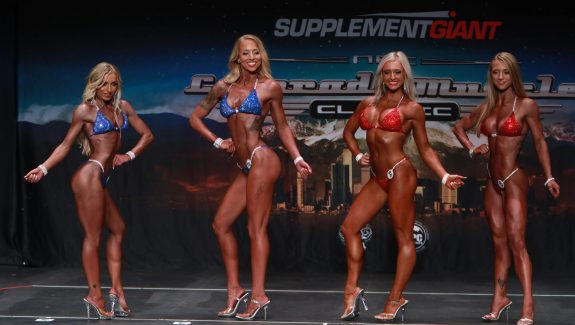
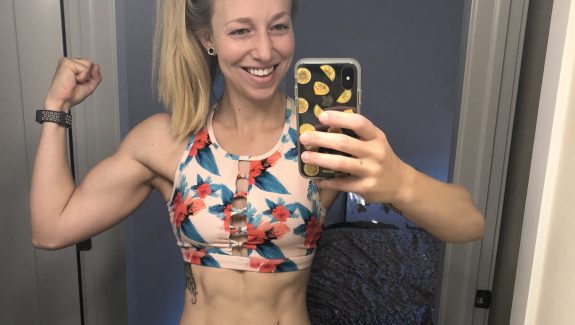
I ran into this directly with my client Kimi, who’s a career trainer herself. She came to me to prep for her first bikini competition, and we walked away with six medals at her first show. That’s its own win. But during contest prep, the entire goal was holding onto muscle while dieting down — not building it. Once she moved into her off-season, the goal flipped: build as much muscle as possible in her weakest area, as fast as we reasonably could, while staying lean enough to stay close to stage-ready.
Her glutes had been stalled for months. Not from a lack of effort — from a lack of program specificity. What had been a balanced training plan needed to become a glute specialization plan. So I pulled five specific program design levers. Four weeks later, her glutes had grown a full inch — no diet change, no added cardio, no new supplements, no improvement to sleep or recovery. Just training differently.
Most programs already have these five levers sitting in them, ready to be pulled. The reason they don’t get pulled is that it’s the coach’s job to show a client how, and most programs never get that specific. Here’s each one, the mechanism behind it, and how to actually apply it.
Lever 1: Train Closer to Failure
The first thing we fixed with Kimi wasn’t volume or exercise selection. It was technique — specifically, how close to true failure she was actually training.
A lot of lifters count a set as “done” once they hit the rep number written on the program. But proximity to failure — not the rep count on paper — is one of the clearest and most well-supported drivers of hypertrophy in the research. A 2024 dose-response meta-regression in Sports Medicine found a clear relationship between how close a set gets to failure and how much muscle it builds (Robinson et al., 2024). In plain English: sets taken to or near failure build more muscle than sets stopped early, because getting closer to failure is what maximizes mechanical tension on the target muscle — and tension on the muscle is the single most important driver of growth.
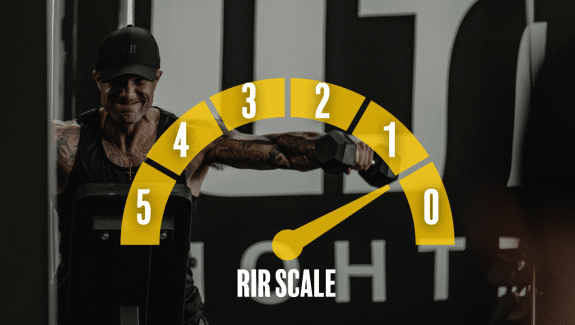
That research also comes with a useful nuance: training to 1 rep in reserve (RIR 1) produces hypertrophy outcomes similar to training to absolute failure (RIR 0). You don’t have to grind every set into the ground — you have to get close, consistently, with good execution.
So with Kimi, we cleaned up her execution on every glute-targeted exercise in her program and made sure she was reaching near failure on most sets: full range of motion, controlled tempo, and the tension actually loaded onto the glutes instead of leaking into the lower back, quads, or hamstrings. If the movement isn’t placing tension specifically on the muscle you’re trying to isolate, you’re not training that muscle — you’re just moving weight near it. No amount of effort fixes a rep that never loaded the target tissue in the first place.
This is the first lever to pull for a reason: technique and effort are the foundation everything else stacks on. But technique alone doesn’t build an inch of new tissue in four weeks. You still have to maximize that mechanical tension once the skill of targeting it is in place — which is what proximity to failure does. And research suggests most lifters undersell how close to failure they actually train. After 16+ years of coaching and 2,000+ clients, I’d agree — if you’re reading this assuming it doesn’t apply to you because you “already train hard,” you’re better off assuming it does.
Once a client’s execution and effort are both locked in, that’s when the next lever gets stacked on top.
Lever 2: Train Through a Full — and Sometimes Exaggerated — Range of Motion
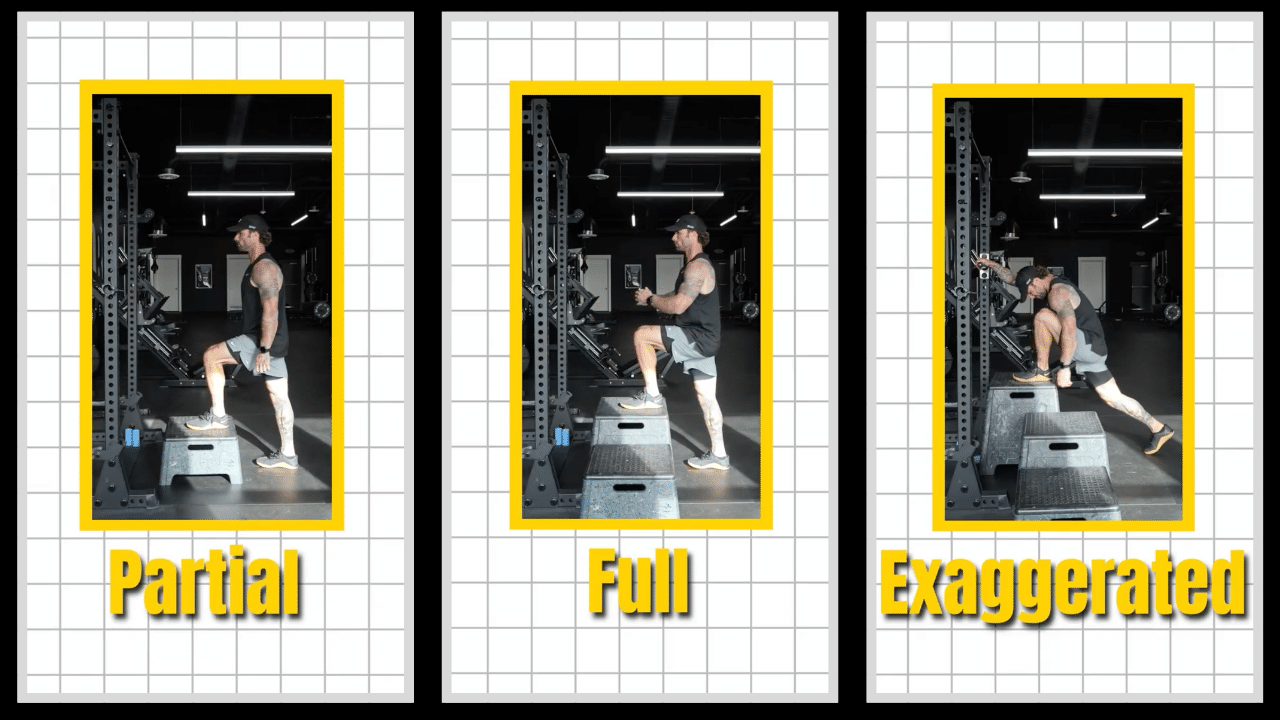
The second change focused on range of motion. Specifically, training the glutes through a full range of motion, with extra emphasis on the lengthened, stretched position at the bottom of the movement.
There’s a growing body of research on this — often called stretch-mediated hypertrophy or “lengthened partials.” The idea is that training a muscle while it’s loaded in a lengthened position produces more growth than training the same muscle only through a shortened or mid-range position. Recent studies back this up with real numbers: Kassiano and colleagues found lengthened partial training on calf raises produced roughly double the hypertrophy of full-ROM training in some muscle heads, and research presented by Maeo on hip-dominant movements found a similar pattern — lengthened partial training outperforming full range of motion by a meaningful margin (Stronger by Science research review).
Worth being honest about the mechanism here, because this is a case where the marketing has outrun the science: it’s probably not “stretching” the muscle the way animal studies demonstrate (those show stretch protocols can produce massive hypertrophy, but human training studies show far more modest effects). What the human research does show consistently is that training at longer muscle lengths increases fascicle length — a real, measurable form of muscle growth — more than training at shorter lengths does. You don’t need to chase an intense, maximal stretch. You need the muscle under load at a longer length than most lifters train at.
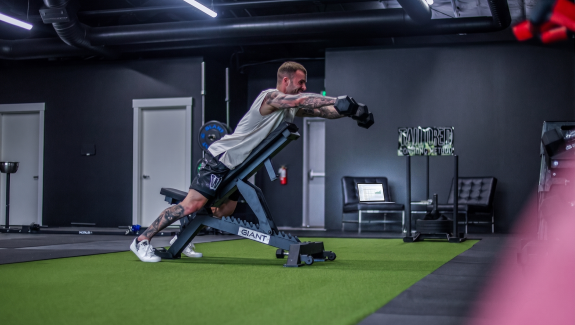
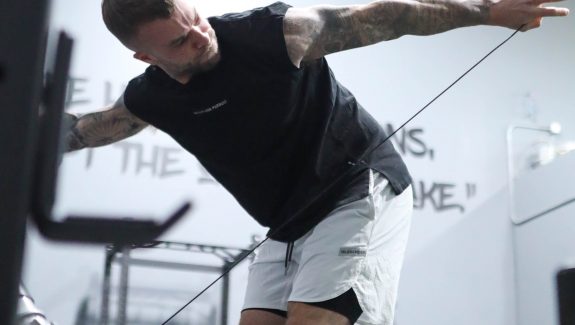
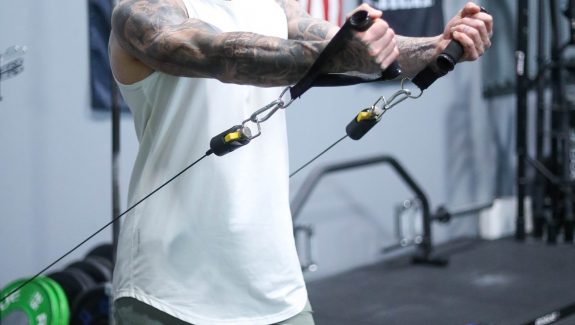
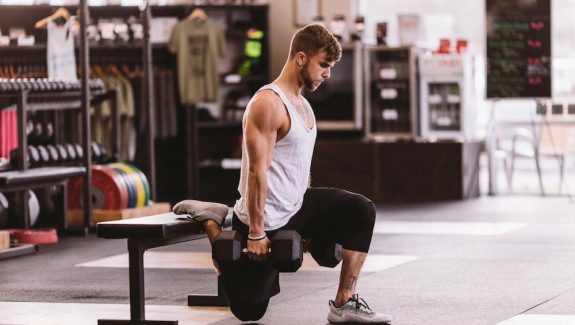
With Kimi, this meant making sure the sets she was already doing were overloading the glutes specifically in that stretched range — before we ever added extra sets or exercises on top. For example, on a dumbbell step-up, I raised the box height and had her hold onto a squat rack for balance, which let us push further into hip flexion at the bottom without compensation. On hip abduction, instead of stopping the movement once her knees came together, I turned a normal bilateral hip abduction into a unilateral cable version that pulls the working leg across the midline — placing a real stretch on the glute at a depth a standard abduction machine never reaches.
This is also where a lot of people stop, even when they get this far: they add more volume, maybe push closer to failure more often, and if growth doesn’t follow, they call themselves a “non-responder.” The research doesn’t support that conclusion — true non-responders make up under 5% of lifters, and even most of that group becomes a moderate or strong responder once volume is increased and execution is corrected. If a stalled area isn’t growing, the far more likely explanation is lever 1 or lever 2 hasn’t actually been applied yet. (This connects to a broader pattern we see with other stubborn muscle groups, not just glutes.)
How Often Should You Train Glutes? (Lever 3: Frequency)
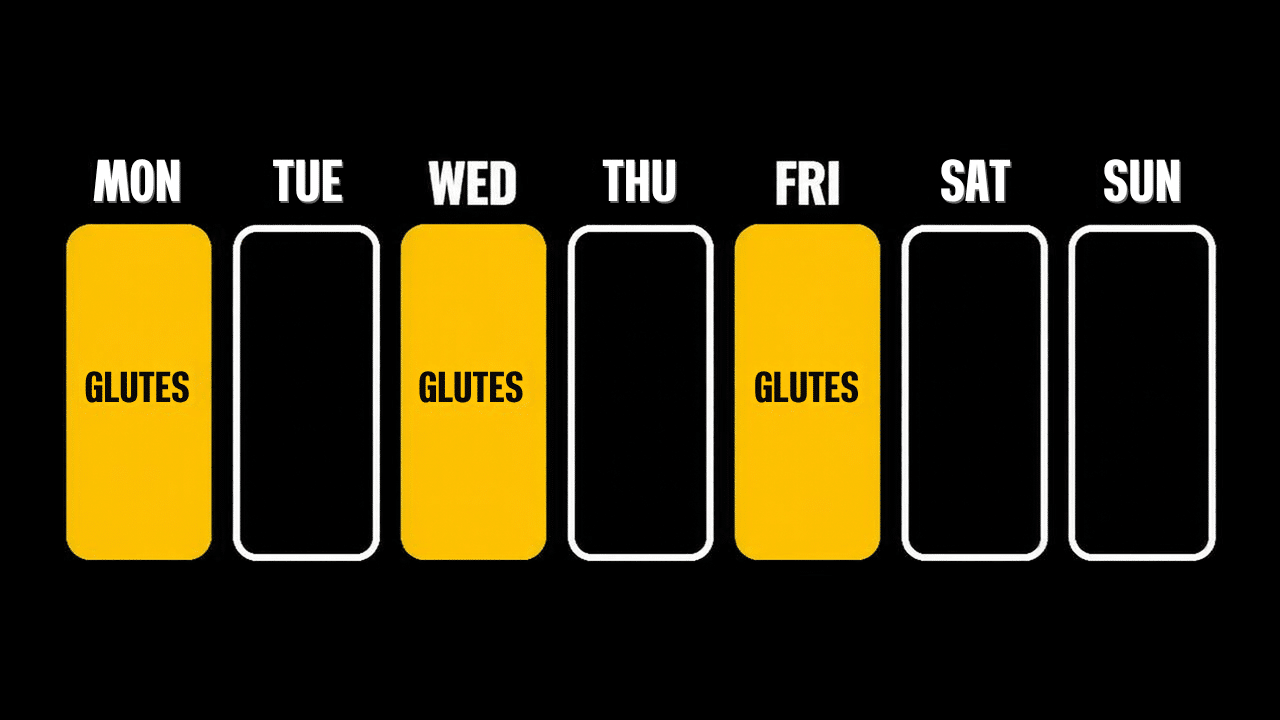
The third change was how often Kimi’s glutes were trained. We moved her from twice a week to three times a week — a higher frequency than any other muscle group in her entire program.
The mechanism is muscle protein synthesis (MPS). A hard training session elevates MPS for a window of time afterward, then it tapers back down. Training a muscle more frequently means you’re stacking more of those growth windows across the week instead of leaving long gaps where nothing’s actively signaling growth. It’s less about any single session and more about the cumulative number of productive stimuli you can fit into seven days.
But frequency isn’t the only reason this works. Spreading training across more sessions also eliminates junk volume — sets that look like effort on paper but aren’t creating a real stimulus. This happens most often when someone crams too much volume for one muscle into a single session. Research on per-session training volume shows that going much beyond roughly 10 to 12 sets for one muscle group in a single day leads to diminishing returns (per-session volume meta-regression). Translation: your 10th, 11th, and 12th set of glute work in one session are doing a lot less than your 2nd or 3rd. You’re lifting lighter weight with worse execution as fatigue climbs, which means the muscle isn’t getting the mechanical tension described in lever 1 — it’s just getting tired.
So instead of jamming all of a week’s glute volume into one or two brutal sessions, we broke it across three days. Every time Kimi trained glutes, she had a better physiological response, lifted heavier for each exercise, and executed with better technique — because fatigue from the rest of that volume wasn’t already stacked on top of her.
This is also where reading your own effort accurately matters, which is the same skill from lever 1 — see our breakdown of RIR and how to actually gauge proximity to failure if you’re not confident you’re reading that correctly session to session.
Lever 4: Raising Glute-Specific Volume
The fourth change was volume — but not in the “just add more sets everywhere” sense. That’s junk volume, and it’s exactly what lever 3 was built to eliminate.
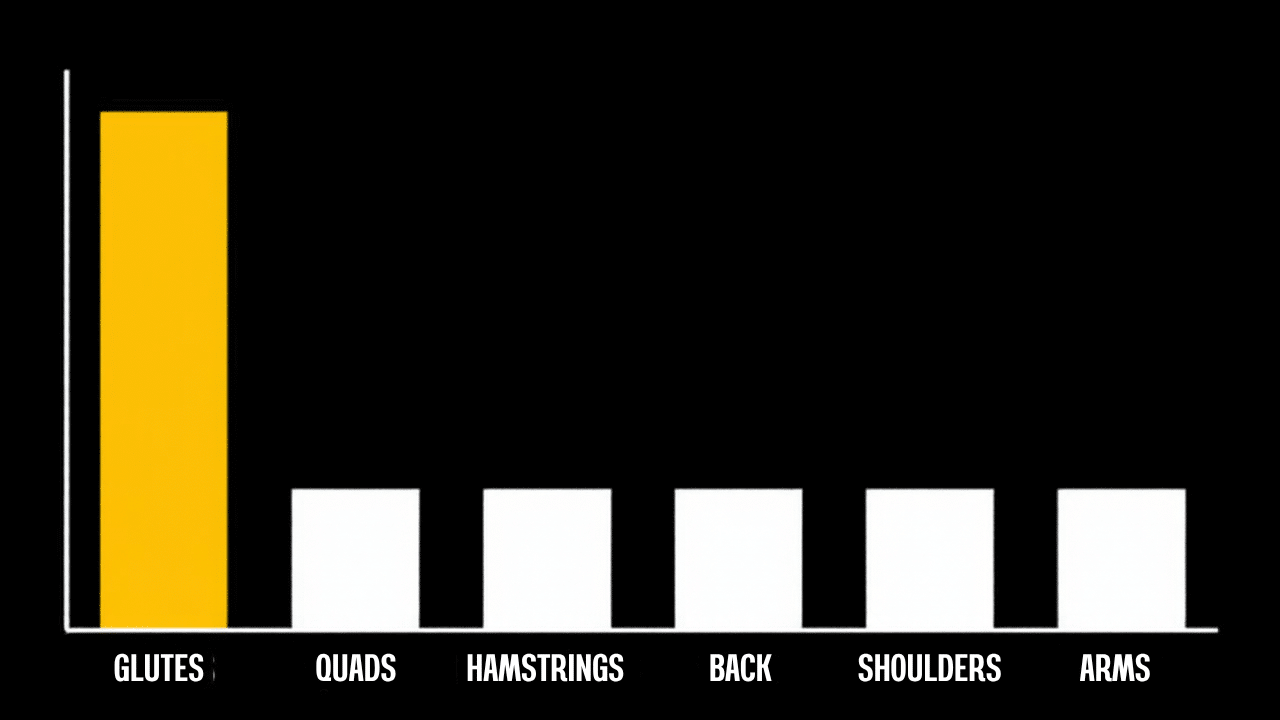
What we actually did was increase the isolated, targeted volume for Kimi’s glutes well above any other muscle group in her program. Most people hesitate here because they’re afraid of losing muscle elsewhere. But the reality is that maintaining a muscle you’ve already built takes relatively little volume, while building new muscle takes a lot. That asymmetry is what makes this lever work: we were comfortable dropping volume on her other muscle groups by roughly 25 to 50%, while raising glute volume by that same 25 to 50%. Those are rough, directional numbers — not a formula — but they’re generally where this kind of redistribution lands in practice.
The other muscles don’t lose size doing this, because you don’t need high volume to hold onto muscle you’ve already got — you just won’t see much new growth there, which is fine, because growth in those areas isn’t the goal right now. And because total training volume across the whole week doesn’t change much (you’re redistributing, not simply adding), the nervous system and joints aren’t taking on a bigger overall load. You’re not creating an overtraining problem; you’re reallocating an existing one toward the area that needs it.
I’ll be straight about the tradeoff, though: concentrating that much volume on one muscle group can raise a legitimate red flag for overuse — the same joint angle, hit the same way, session after session. That’s exactly why the final lever matters as much as this one does.
Lever 5: Vary Exercises Across Every Function of the Hip
The fifth change focused on exercise selection — specifically, varying movements across every function the glutes actually perform, not just loading up on more hip thrusts.
The hips don’t just hinge. They handle hip extension, hip flexion, hip abduction, and hip external rotation, and they work differently depending on whether a movement is bilateral or single-leg. A lateral shift of the hip or trunk is sometimes required just to get the glutes into a stretched position, depending on which of those movements you’re doing. Training a muscle through all of its functions — not only its main movement pattern — builds more total muscle and balances that growth out across the whole glute, rather than overdeveloping one head while the others lag.
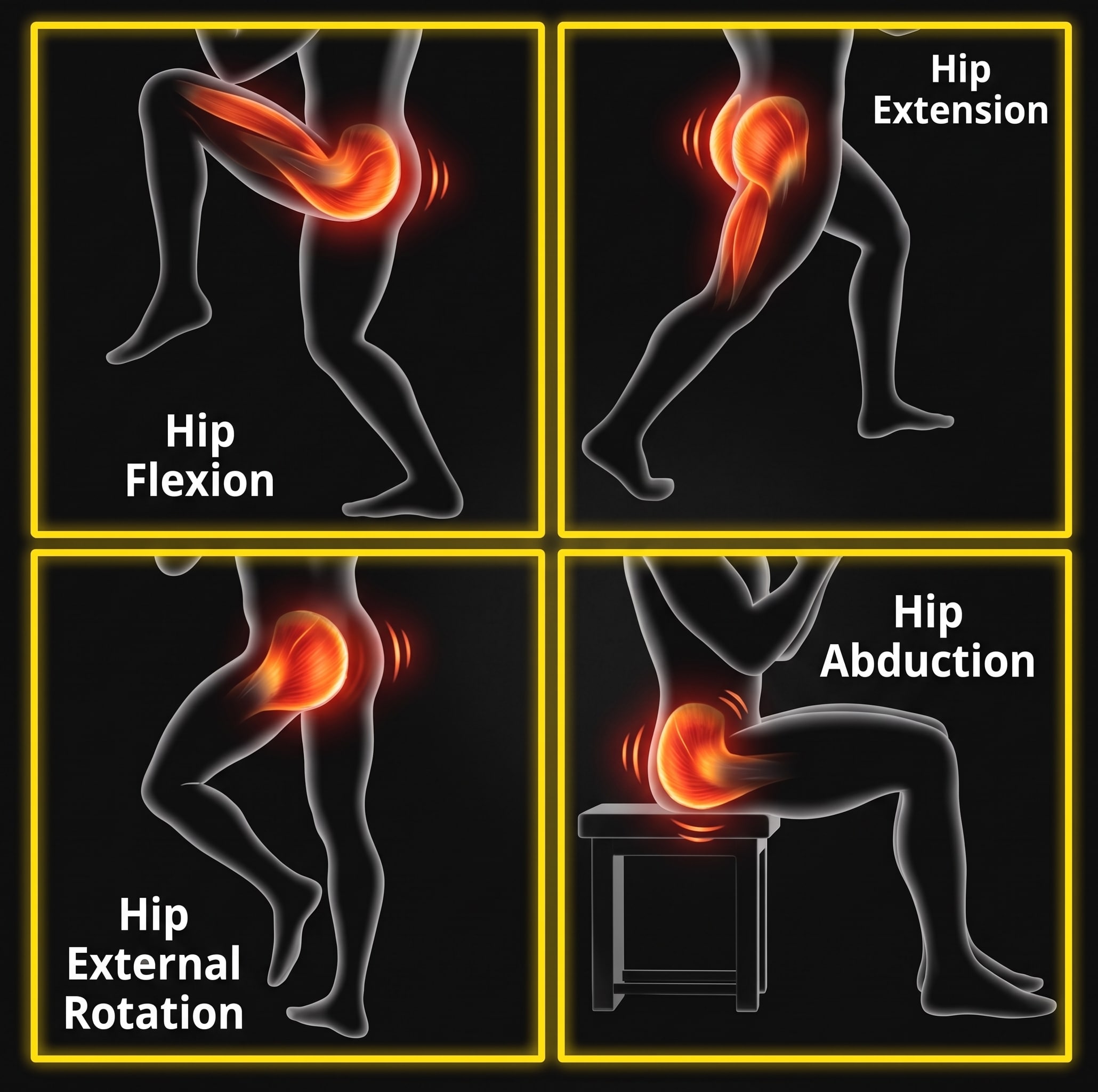
This is also the direct answer to the overuse concern raised in lever 4. Spreading a high total volume across different exercises, movement patterns, loading angles, and joint positions means no single joint angle or tissue is getting hammered the same way every session. In practice, that means taking the total weekly volume targeted at the glutes and spreading it across exercises that hit different parts of the muscle and different hip functions, then undulating the rep ranges and loading: heavier loads in the 5–10 rep range on something like an RDL or hip thrust (to maximize the mechanical tension from lever 1), moderate loads in the 10–15 rep range on a glute-dominant lunge, and lighter loads in the 20–25 rep range on something like a cable hip abduction. Different movements, different rep ranges, different loading strategies, different ranges of motion — all targeting one muscle group.
This is also where choosing the right exercises for the result you’re after matters more than defaulting to whatever’s trending. A program built around five or six different hip-function patterns, run consistently, is what actually guarantees the growth the first four levers set up.
Putting the Five Levers Together
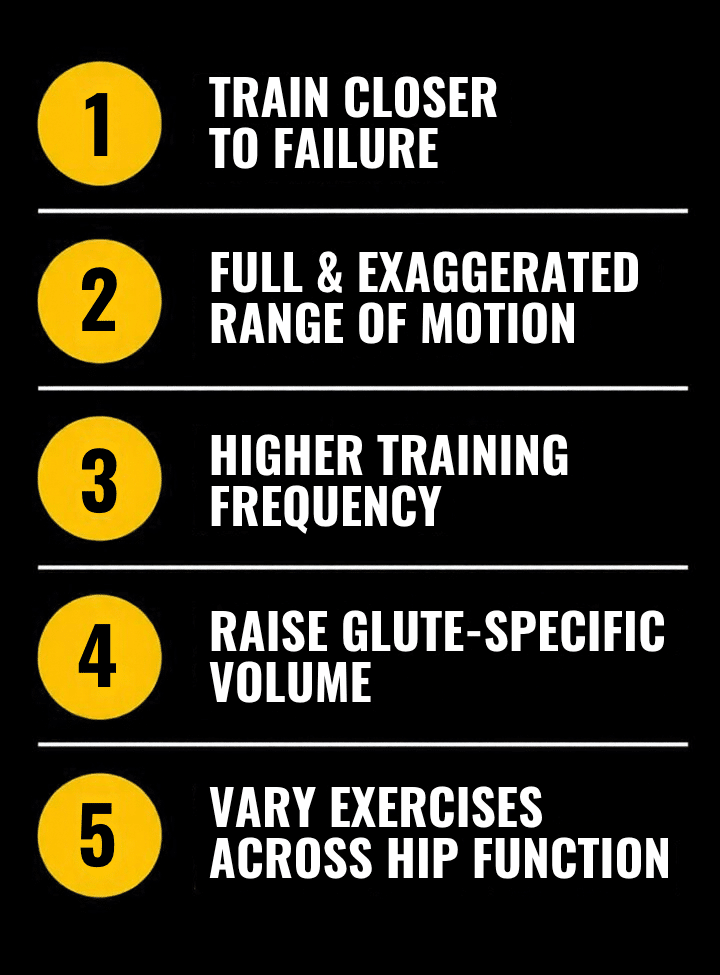
To recap: train closer to failure, use a full and sometimes exaggerated range of motion, raise frequency, increase isolated glute volume above the rest of your program, and prioritize exercise variety that hits every function of the hip.
One inch of glute growth in four weeks isn’t luck, and it isn’t a shortcut — it’s what happens when a program is built with intention instead of guesswork. It’s also worth saying plainly: Kimi is an advanced, highly coachable training client with 2,000+ hours of her own coaching experience behind her, so her rate of response won’t be identical for everyone. These five levers are the mechanism, though, and the mechanism holds regardless of where you’re starting from — you just have to actually pull them, which is harder than it sounds when you’re programming for yourself without outside eyes on your execution.
That’s blunt, but it’s also just true: this is literally what coaches are for. If you want these five levers built into your own program — not just read about, but actually applied to your technique, your volume, and your weak points — that’s what our online coaching team does.

Glute Training FAQ |
|
How often should you train glutes for growth? |
Most lifters respond well to training glutes 2–3 times per week, spreading total volume across sessions instead of concentrating it in one. This keeps muscle protein synthesis elevated more consistently across the week and avoids the diminishing returns that set in once a single session goes much past 10–12 direct sets for one muscle group. |
Do hip thrusts build glutes better than squats? |
Hip thrusts place more direct tension on the glutes through a strong hip extension range, which is why many programs lean on them heavily. But no single exercise trains every function of the hip — extension, abduction, flexion, and external rotation all need direct work, so a program built only around hip thrusts will leave growth on the table compared to one that varies exercise selection across hip functions. |
Why have my glutes stopped growing even though I’m training hard? |
A stalled muscle group is almost always a training-specificity problem, not an effort or diet problem. The most common causes are not training close enough to true failure, not emphasizing the stretched range of motion, training the muscle too infrequently, under-dosing targeted volume relative to other muscle groups, or relying on too narrow a set of movement patterns. True non-responders are rare — research puts that group at under 5% of lifters, and even most of them respond once volume and execution are corrected. |
Is it bad to train one muscle group with way more volume than the rest of your program? |
It can be, if that volume isn’t also varied across different exercises, loading angles, and rep ranges, since that concentrates stress on the same joint positions session after session. But a significant, temporary increase in targeted volume for one lagging muscle group — paired with a matching decrease elsewhere — is a standard and effective specialization strategy, since maintaining existing muscle takes far less volume than building new muscle does. |
What is stretch-mediated hypertrophy and does it actually work? |
Stretch-mediated hypertrophy refers to training a muscle while it’s loaded in a lengthened position, rather than only through a shortened or mid-range position. Human research shows this approach reliably increases fascicle length — a real, measurable form of muscle growth — more than training at shorter muscle lengths, with some studies showing roughly double the hypertrophy in the lengthened condition. It doesn’t require an intense or painful stretch, just consistent loading at a longer muscle length than most lifters train at. |