
The Step-by-Step Guide to Sustainable Fat Loss:
The Tailored Coaching Method Approach
If you’ve spent any time in the fitness industry, you know that fat loss is often portrayed as a chaotic sprint. Most “gurus” want you to slash calories to near-starvation levels on day one and pray your willpower holds out longer than your metabolic rate.
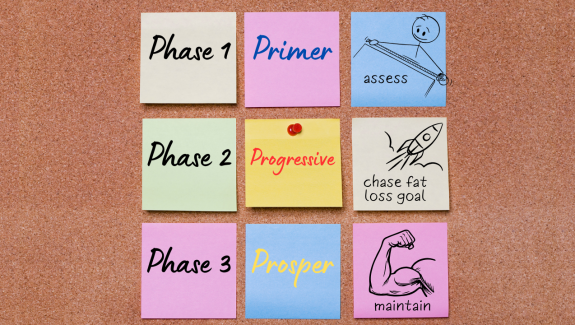
At Tailored Coaching Method (TCM), we do things differently. We don’t just want you to lose the weight; we want you to keep it off while feeling like a high-functioning human being. Effective fat loss isn’t about doing the right things in the right order. At Tailored Coaching Method (TCM), our fat loss plan is built on a three-phase blueprint: Primer, Progressive, and Prosper
Phase 1: The Primer (Calibration & Consistency)
Before we even think about a caloric deficit, we must “prime” the metabolism. Think of this as the “calibration” phase.
What is a Primer Phase?
It is a short period of time dedicated to developing consistency with tracking and adherence. We use this time to rule out inaccuracies or potential issues like “hidden” calories or inconsistent logging before we make any aggressive changes.
Why Can’t We Just Start the Diet?
The truth is, you are much more likely to be honest, avoid stress-induced eating, and develop accuracy with tracking while you are at or near maintenance calories. Jumping straight into a deficit often leads to “dieting on a whim” without a clear baseline or an accurate maintenance intake.
How Long Does it Last?
The duration depends on your dieting history and current habits:
- Advanced Dieters: 1-2 Weeks.
- Intermediate Dieters: 1-4 Weeks.
- Beginner Dieters: 2-6 Weeks.
Phase 2: The Progressive Phase (The Work)
Once the foundation is set, we move into the Progressive Phase. This is where the actual fat loss happens.
Here’s the TLDR table, to give you a fast overview:
| Phase | Main Goal | Typical Duration |
| Primer |
Calibration & Consistency |
1–6 Weeks |
| Progressive |
15–25% Caloric Deficit |
6–34 Weeks |
| Prosper |
Metabolism Restoration |
Indefinite/Maintenance |
1. What is the best caloric deficit for fat loss?
Research often uses a deficit of 20-35%, but for the majority of our clients, we suggest a 15-25% deficit.
- Aggressive vs. Conservative: If you have more fat to lose, we can be more aggressive. If you are already lean and experienced, we remain more conservative to protect your hard-earned muscle.
- The Power of the “Front-Load”: Starting with an aggressive initial approach followed by a conservative approach throughout the remainder of the diet often leads to the best long-term results.
When setting your initial calorie intake, use our BMR Calculator to ensure you aren’t starting too low or too high based on your current starting point.
2. Calculating and Setting Your Macros
Calories dictate weight loss, but macros dictate body composition. To look athletic and feel energized, you need a specific ratio.
- Step 1: Set Protein (The Non-Negotiable): Protein is your primary tool for muscle preservation and satiety. We recommend 1.0 to 1.2 grams of protein per pound of goal body weight. As calories decrease throughout the diet, protein should stay steady or even increase to protect against muscle loss.
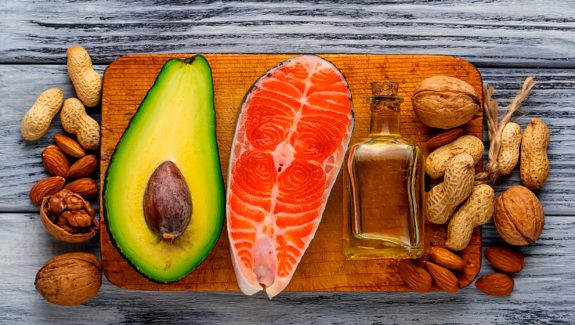
- Step 2: Set Fats (The Hormonal Floor): Fats are essential for hormone health and vitamin absorption. We generally recommend setting fats at 20-30% of your total daily calories. You should rarely go below 0.25g per pound of body weight for extended periods.
- Step 3: Set Carbs (The Performance Fuel): Carbs are your body’s preferred fuel source for high-intensity training. If you are a strength-focused individual, we want to preserve carbs as long as possible and pull from fats when making adjustments to keep training performance high.
Coach Cody’s Pro Tip:
“Don’t make adjustments from an inconsistent tracking log. Adherence must be locked in before making smart adjustments to your deficit.”
Implementing Cardio for Fat Loss
Cardio is a tool to be used when you’d rather move more than eat less. At TCM, we view cardio through the lens of recovery and data collection.
How many steps should I get per day to lose fat?
NEAT (Non-Exercise Activity Thermogenesis) is your daily movement—walking the dog, cleaning the house, or pacing while on a phone call. Going into a diet, we suggest adding 1,000-3,000 steps simply to maintain your TDEE as your body begins to adapt. So this is less about how many steps per day is best for fat loss, in general, and more about how many additional steps you need to make personally, based on where you’re currently at.
Formal Cardio Modalities
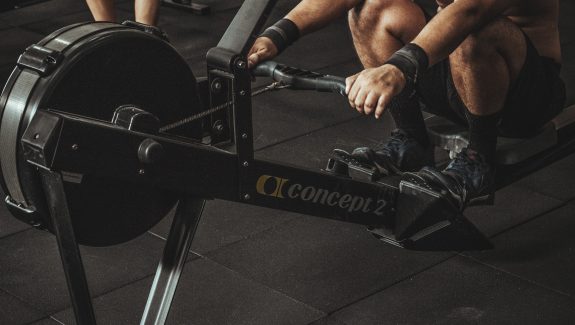
- LISS (Low-Intensity Steady State): The “sweet spot” is 30-40 minutes, 2-5x per week. Avoid exceeding 45 minutes, as it can begin to compromise recovery and lean body mass.
- HIIT (High-Intensity Interval Training): Best used in the first 6-8 weeks when energy is still high. We recommend 10-20 minutes, 2x per week. For fat loss, 30 or 60-second intervals with 90 or 120-second rest periods are most effective.
Coach Cody’s Suggested Application
Before you ever touch a treadmill for “formal” cardio, you should maximize your lifestyle movement. I recommend keeping a consistent daily step count between 10,000 and 15,000 steps before adding extra sessions. This ensures your baseline activity is high enough to support a deficit without unnecessary fatigue.
When we do implement formal cardio, it is crucial to keep it standardized and in the aerobic zone. High-intensity protocols like HIIT can be a double-edged sword; they are harder to recover from and difficult to keep consistent week-to-week. Standardizing circuits or intervals is tough because your intensity and overall output will fluctuate based on how you slept, your stress levels, and your current energy.
Instead, I prefer “Incline Treadmill Walking.” It allows us to set the exact speed, height of the incline, and duration. This keeps your calorie expenditure identical every single week until your body adapts—which usually takes several weeks to occur. This data-driven approach allows us to “nudge” the metabolism only when necessary, rather than guessing with random intensity.
And always remember that your body will adapt to the deficit you’ve created and therefore require you to adjust the plan at some point in time. So if you notice your weight stalling despite high adherence, you may be experiencing metabolic adaptation. If this happens, don’t freak out! It just means you need to drop your calories or increase your cardio, to create a deficit once again (start by adjusting by about 5% calories in this scenario).
Phase 3: The Prosper Phase (The Exit Strategy)
The diet isn’t over when you hit the goal weight; it’s over when you’ve successfully transitioned back to a sustainable lifestyle. This is where a well thought out reverse diet plan comes into play.
1. The Speed of the Reverse
How we exit the diet depends on your biofeedback (hunger, sleep, energy, and libido):
- Extremely Lean / Concerning Biofeedback: An immediate jump to your new estimated maintenance, followed by slow adjustments.
- Very Lean / Healthy-Enough: An immediate jump halfway to maintenance.
- Fairly Lean / Healthy: Slow, incremental adjustments from start to finish.
After assessing where you’re at physically, physiologically, and psychologically, post diet ⏤ it’s time to make a decision between a recovery diet approach or a reverse diet approach. Sound similar, but there are small nuances that can make a large difference in some people.
A recovery diet approach is often increases calories faster and/or implements bigger adjustments, while focusing mostly on health markers.
Whereas a reverse diet approach uses a more conservative approach, making slow and steady adjustments to prioritize staying as lean as possible while increasing calories.
2. How to Adjust Your Intake
To successfully transition out of the deficit, we start with an initial caloric bump of 20-25% from your final dieting calories. This serves as a “rescue” for your metabolism and hormones.
- Prioritizing Fats: Most of this initial increase should go toward bringing your fats back up to the minimum requirement for healthy hormonal function.
- Adding Carbs: The remainder of that initial 20-25% bump is filled with carbohydrates to fuel training and restore glycogen.
- Ongoing Adjustments: Once that initial jump is made, we wait for the body to stabilize. Future adjustments are typically 5% increases in total calories, and these are almost exclusively done via carbohydrates. This allows us to keep pushing performance in the gym while keeping body fat gain under control.
Setting up the baseline math is simple, but managing the psychology and metabolic adaptation over 12+ weeks is where most people fail. This level of granular adjustment is exactly why elite online fitness and nutrition coaching provides a significantly higher return on investment than a cookie-cutter template.
3. Acceptable Rate of Gain
During a reverse diet, some weight gain is expected and healthy. We look for a “buffer” of 0-10lbs depending on how lean you got:
- Extremely Lean: 5-10lbs.
- Very Lean: 0-7.5lbs.
- Fairly Lean: 0-5lbs.
When to Call It Quits? If diet fatigue is causing poor recovery, adherence is failing weekly, or your social and family life is suffering, it is time to shift to maintenance. Take a break for 3-6 weeks and revisit the goal when the time is right.
Common Fat Loss Myths vs. TCM Facts
- Myth: You must skip the maintenance phase and jump straight into a deficit to lose fat quickly.
- TCM Fact: We prioritize a Primer Phase (1–6 weeks) because clients are more likely to stay honest with tracking and develop consistency when they aren’t in a hungry, stressed state. This foundation prevents the “wheels falling off” three weeks into the diet.
- Myth: Once you hit a weight loss plateau, you should drastically slash your calories again.
- TCM Fact: Plateaus only require small “nudges.” A 5–10% drop in calories (typically from carbs and fats) is usually enough to get the needle moving again. Slashing too much too soon just leaves you with nowhere to go when things get difficult later on.
- Myth: Diet breaks are just “cheating” and will ruin your progress.
- TCM Fact: Strategic Diet Breaks (1–2 weeks) or Refeeds (1–2 days) are essential tools for long-term adherence. They help manage diet fatigue, replenish glycogen stores for training, and can even reverse some of the negative physiological adaptations that happen during a long-term deficit.
- Myth: High-Intensity Interval Training (HIIT) is the only way to “burn” fat through cardio.
- TCM Fact: While HIIT is effective early on when energy is high, LISS (Low-Intensity Steady State) is often the “sweet spot” for fat loss because it is easier to recover from and less likely to compromise muscle mass. We also rely heavily on NEAT (total daily steps) from start to finish to maintain your metabolism.