
Your Genetics Aren’t The Reason You’re Stuck (But They Are Your Roadmap)
“I just have bad genetics.”
I’ve heard it in my DMs, I’ve heard it from potential clients on discovery calls, and I’ve heard it from the person at the gym who’s been doing the same circuit for three years with zero change.
It’s the ultimate “get out of jail free” card. If your DNA is the problem, then the lack of results isn’t your fault, right? It’s just the hand you were dealt.
But it’s not just every day people, it’s famous people making this excuse as well. In fact, Oprah recently discussed this on The View and it has been screaming across social media. Here’s what she said, for millions to hear:

“I realized I’d been blaming myself all these years for being overweight, and I have a predisposition that no amount of willpower is going to control. Obesity is a disease. It’s not about willpower—it’s about the brain… If you have obesity in your gene pool, I want people to know it’s not your fault.”
Well, I’m here to give you some “Choose Hard” truth:
Your genetics might be the reason things are slower or harder for you than the guy next to you, but they are not the reason you can’t lose fat.
And as much as I respect Oprah for her success, I did feel it was neccessary for me to record the podcast on this and write this article about the subject because her reach is so large and if this episode of the view influences millions of viewers into believing they can’t do anything about their bad genetics and being overweight⏤that’s a major loss for the fitness coaching industry.
However, still… in this industry we do see two extremes. One side says genetics is everything. The other says genetics don’t matter at all and it’s just “calories in vs. calories out.” As always, the truth lives somewhere in the middle.
Let’s break down the science of what you can—and can’t—change (and if you’d rather listen, here’s the podcast below):
The Genetic Reality: Your Blueprint
Let’s be real: Genetics are a factor. We call this your genotype. It dictates the “starting line” of your fitness journey. If you feel like you’re fighting an uphill battle, science actually backs you up in three specific areas:
1. Fat Cell Distribution (Where You Hold It)
Ever wonder why you have a six-pack but still carry “love handles,” or why your legs are shredded while your midsection stays soft? That is almost entirely genetic.
- The Science: Landmark studies by the GIANT Consortium (analyzing over 300,000 individuals) identified over 140 locations in the genome that dictate body fat distribution. Specifically, they found that genes like LYPLAL1 influence your waist-to-hip ratio. You can’t “spot reduce” fat because your DNA has already pre-determined the “order of operations” for where fat is pulled from.
2. Basal Metabolic Rate (Your Engine’s Idle)
Your BMR—the calories you burn just staying alive—isn’t just about how much muscle you have; it’s partially inherited.
- The Science: Research published in The Journal of Experimental Biology suggests that while body mass is the biggest driver, there is a significant heritable component to BMR. Some people naturally “idle” higher, burning more fuel at rest. This doesn’t mean you have a “broken” metabolism; it just means your “budget” for daily calories might be tighter than someone else’s.
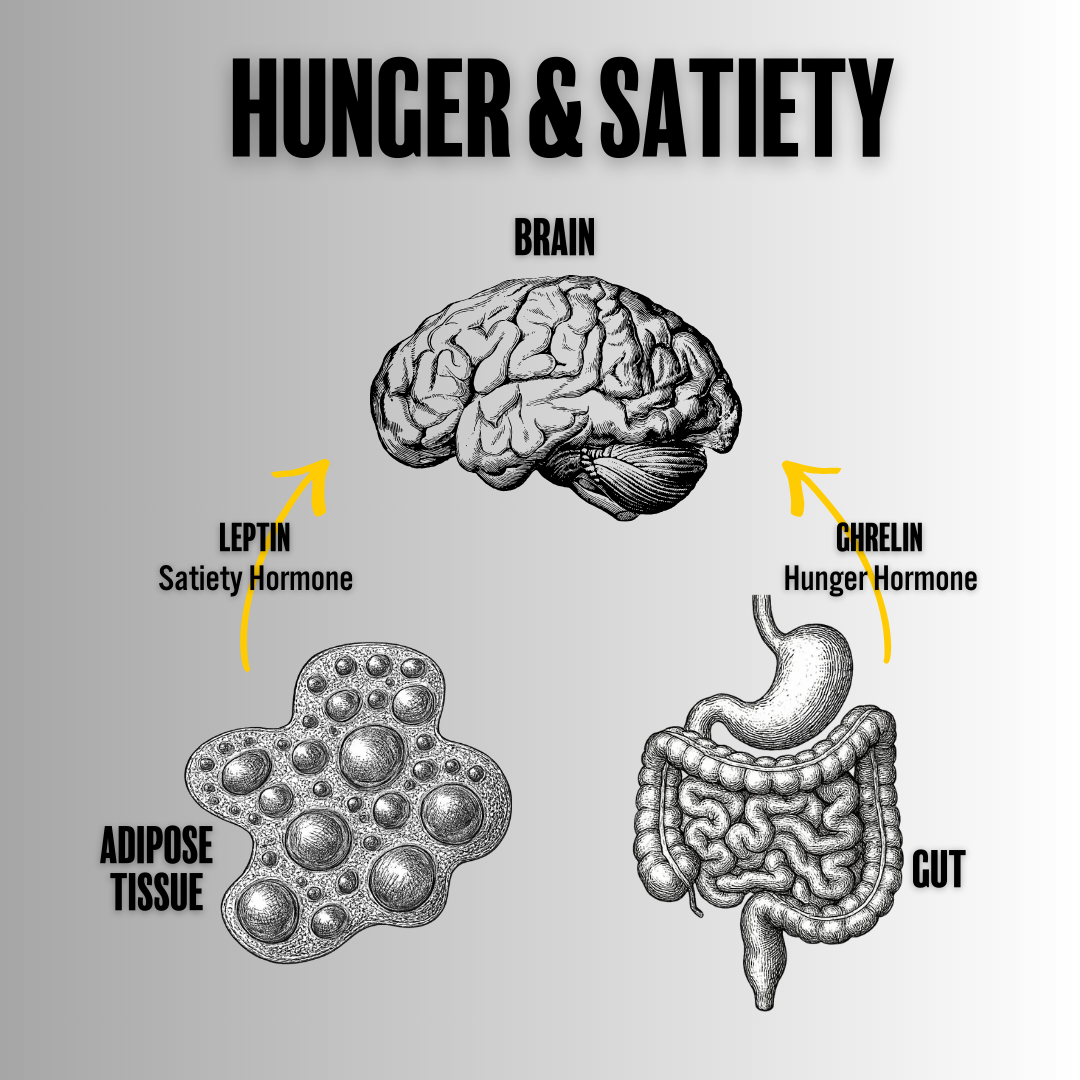
3. Hunger Hormones (The Volume of Your Appetite)
This is the one people rarely talk about. Some people genuinely feel more hunger than others because their brain’s “thermostat” is set differently.
- The Science: Genetic variants in the GHRL (Ghrelin) and LEP (Leptin) genes influence how sensitive you are to hunger and fullness. A study in the Journal of Clinical Endocrinology & Metabolism found that specific mutations in the Ghrelin gene are directly linked to higher hunger scores and a greater risk for metabolic syndrome. If you feel like you’re “always hungry,” it might not be a lack of willpower—it’s a louder biological signal.
The “Obesity Gene”: Understanding FTO
If there is a “boogeyman” in the world of fitness genetics, it’s the FTO gene (Fat Mass and Obesity-associated gene). This is the most well-studied genetic link to obesity, and if you’ve struggled with your weight your whole life, there’s a chance you carry the “at-risk” variant.
What FTO Actually Does
The FTO gene isn’t a “fat” gene—it’s a self-regulation gene. It primarily expresses itself in the hypothalamus, the part of your brain that controls appetite.
- Hyper-palatability: People with the “A” allele (the high-risk variant) of FTO tend to have a higher preference for high-calorie, energy-dense foods.
- Low Satiety: FTO variants make it harder for the brain to register “fullness,” leading to a tendency to overeat before the signal to stop kicks in.
- Adipogenesis: Recent research in Frontiers in Genetics shows that FTO also plays a role in how your body actually creates fat cells (adipocytes), potentially making it easier for your body to store energy as fat rather than burning it.
Is FTO Destiny? (The “Choose Hard” Answer)
Here is the part where most people give up, but where you need to lean in. Carrying the FTO risk variant increases your predisposition to obesity, but it is not a life sentence.
A massive meta-analysis of over 218,000 adults found that physical activity blunts the effect of the FTO gene by roughly 30%. In plain English: If you have the “bad” gene but you choose to train hard and stay active, you effectively “mute” the genetic signal. You are not a DNA robot. Your environment and your habits dictate whether that gene is allowed to run the show.

Epigenetics: How You Rewrite Your Genetic Code
If genetics is the hardware, epigenetics is the software. You cannot change the hard drive you were born with, but you can absolutely change how the programs are run.
This happens through a process called DNA Methylation. Think of methyl groups like “dimmer switches” on your genes. Your behaviors—what you eat, how you move, and how you sleep—literally turn the volume up or down on specific genetic signals.
The “Good”: Training Your DNA to Adapt
When you “Choose Hard” and stay consistent, you aren’t just getting stronger; you are physically changing your DNA’s expression.
- The Study: Researchers at the Karolinska Institutet conducted a “one-legged cycling” study. Participants trained one leg for three months while the other remained untrained.
- The Result: The trained leg showed altered DNA methylation at over 4,000 genes in the skeletal muscle. These changes were specifically linked to improved metabolism, insulin sensitivity, and reduced inflammation.
- The Takeaway: Your DNA “remembers” your training. This is why it’s easier to get back into shape after a break than it was to get there the first time. You’ve already “pre-programmed” your software for success.
The “Bad”: The Cost of a Sedentary Lifestyle
Just as you can “level up” your software, you can also let it “glitch” through inactivity. Epigenetics doesn’t care about your intentions; it only responds to the environment you provide.
- The Study: A systematic review published in Frontiers in Cell and Developmental Biology highlighted that obesity and a sedentary lifestyle act as “accelerants” for epigenetic aging.
- The Result: Inactivity leads to the “decondensation” of chromatin (the stuff that packages your DNA), causing an accumulation of errors. Essentially, being sedentary “unlocks” genes associated with inflammation and metabolic decay that would have otherwise stayed silent.
- The Takeaway: You aren’t just “getting soft” when you stop moving; you are literally accelerating the biological aging of your cells.
Case Study: The Power of Lifestyle Intervention
The “One-Legged” Epigenetic Deep Dive
In 2014, researchers at the Karolinska Institutet in Sweden conducted a study that is now considered a cornerstone in exercise epigenetics. They wanted to isolate the effects of exercise from other variables like diet, sleep, or general “luck.”
The Setup: They recruited 23 young, healthy men and women. For three months, these participants trained only one leg on a cycle ergometer (45 minutes, four times a week). The other leg served as the perfect internal control—it experienced the same diet, the same hormone fluctuations, and the same genetic background, but zero exercise.
The Findings: When the researchers took muscle biopsies from both legs, the results were staggering. In the trained leg, they found over 4,000 genomic sites with significant changes in DNA methylation.
Why This Matters for You:
- Metabolic Reprogramming: The changes occurred primarily in genes associated with energy metabolism, insulin response, and inflammation. By training that leg, the participants were literally “unlocking” the machinery that burns fuel more efficiently.
- Structural Adaptation: Genes related to muscle remodeling and structural growth were “switched on.” This proves that the body doesn’t just get better at a task; it changes its internal software to make that task easier to perform in the future.
- The “Switch” is Real: The untrained leg showed none of these changes. This confirms that your genetics are dynamic. If you don’t move, the software stays in “power-save” mode. If you train, you force the system to upgrade.
Case Study: The “Obesity Gene” Intervention
Another massive piece of evidence comes from the Diabetes Prevention Program. Researchers looked at individuals carrying the high-risk FTO gene variant (the one that makes you prone to obesity).
They found that while these individuals were genetically predisposed to weigh more, a lifestyle intervention consisting of 150 minutes of physical activity per week and a structured diet completely neutralized the genetic risk.
- The Data: In the “lifestyle” group, those with the high-risk FTO gene lost just as much weight as those without it.
- The Conclusion: The “Obesity Gene” only dictates your weight if you live an “Obesity Lifestyle.” When you introduce the “Choose Hard” variables—resistance training and caloric control—the gene’s power over your phenotype is virtually erased.
Silencing The Obesity Gene (FTO):
1. High-Protein Diets (The “Pounds Lost” Trial)
The most significant dietary “rebuttal” to the FTO gene comes from the POUNDS LOST Trial.
-
The Study: POUND LOST Trial; a two-year randomized clinical trial published in The American Journal of Clinical Nutrition
-
The Findings: Researchers found that individuals with the high-risk FTO allele actually lost more weight and body fat when placed on a high-protein diet compared to those on a low-protein diet.
-
The Mechanism: High protein intake increases satiety hormones and has a higher thermic effect. In FTO carriers, who naturally struggle with “food noise” and satiety, the protein acts as a pharmaceutical-grade appetite suppressant, bypassing the genetic “hunger” signal.
-
The Shift: We can easily argue that Oprah’s “food noise” isn’t a permanent condition; it’s a signal that can be silenced by hitting a protein target of 1.2g to 1.6g per kilogram of body weight.
2. Sleep Duration (The “Genetic Sensitivity” Window)
One of the most fascinating areas of FTO research is how sleep deprivation “unlocks” the gene.
-
The Study: University of Washington Sleep Center (published in SLEEP).
-
The Findings: In a study of over 1,000 twins, researchers found that short sleep duration (less than 7 hours) significantly increased the genetic influence on BMI. Conversely, getting 7–9 hours of sleep actually suppressed the genetic expression of the FTO gene.
-
The Mechanism: Lack of sleep spikes ghrelin and drops leptin. For someone with the FTO gene, this creates a “perfect storm” where their biology is screaming for calories. Adequate sleep keeps the gene “quiet.”
-
The Shift: Oprah calls it a disease you can’t control, but if you’re sleeping 5 hours a night, you are literally giving that gene the keys to your metabolism. Sleep is the ultimate genetic stabilizer and you can control your sleep, if you choose to.
3. The Mediterranean Diet (Gene-Environment Interaction)
Research published in Diabetes Care looked at how the Mediterranean Diet interacts with the FTO variant.
-
The Study: The PREDIMED Trial.
-
The Findings: Carriers of the FTO variant who had low adherence to the Mediterranean diet had a significantly higher risk of stroke and type 2 diabetes. However, those who strictly followed the diet (high in healthy fats like olive oil and nuts) completely neutralized the increased risk associated with the gene.
-
The Mechanism: The polyphenols and monounsaturated fats in the Mediterranean diet have anti-inflammatory effects that prevent the “metabolic inflammation” the FTO gene typically promotes.
- The Shift: Fill your diet with mostly whole foods and you’re going to closely resemble a Mediterranean diet. This is what we recommend most of our clients do, anyway! For those carrying the FTO gene, you may want to model a mediterranean diet more closely rather than just focusing on whole foods as a general method.
4. Fiber Intake & Gut Microbiome
Newer research in suggests that Dietary Fiber plays a role in “masking” the FTO effect.
-
The Studies: Multiple research papers from The Journal of Nutrition
-
The Evidence: Higher fiber intake (specifically soluble fiber) has been shown to dampen the FTO association with body fat.
-
The Mechanism: Fiber slows gastric emptying and alters gut microbiota. Since FTO carriers have a higher “reward response” to food, the steady energy release from fiber prevents the blood-sugar crashes that trigger those genetic cravings.
- The Shift: Similar to the last point, just prioritizing whole food sources will guarantee to get your fiber intake up and improve your gut microbiome. However if needed, aim for specifically higher fiber foods and fermented foods that help increase overall gut health and wellbeing.
5. Muscle Mass as Metabolic Armor
Research shows that building muscle changes the caloric equation regardless of our hunger hormones or gene pool.
-
The Study: Journal of Applied Physiology.
-
The Evidence: Resistance training increases Resting Metabolic Rate (RMR). People with the same “obesity genes” who have high muscle mass process energy differently than those who are sedentary.
- The Mechanism: Muscle mass changes our physiology in many ways, but some of those ways are within our metabolic and hormone system. Both of which play a major role in counter acting the negative effects of the FTO gene.
-
The Shift: Go work out. Plain and simple! Build muscle, get strong, and stay active.

How to Reprogram Your System Starting Today:
- High-Intensity Signals: HIIT and heavy resistance training provide the strongest “epigenetic signal” for mitochondrial biogenesis (creating new energy factories in your cells).
- Nutrient Density: If you have “thrifty” genetics, you have a smaller margin for error. Whole foods provide the “methyl donors” (like B-vitamins and folate) that your body needs to keep those “bad” genes switched off.
- Identity Shift: Stop “trying to lose weight” and start being the person who never misses a session. When habits become who you are, your genetic predispositions become secondary.
- Consistency Over Everything: Epigenetic changes are dynamic but reversible. You have to keep the signal active for the “software” to stay updated.
The Bottom Line: Your Blueprint is Not Your Destiny
The science is clear: Nature (genetics) provides the board, but Nurture (lifestyle) plays the game. You might have a genetic “lean” toward carrying more body fat or feeling more hunger, but through the power of epigenetics, you have the ability to mute those signals. It won’t be as easy for you as it is for the “genetically gifted,” but it is entirely possible.
Stop blaming your parents and start blaming your environment. Change your habits, change your expression, and change your life.
The Obesity Genetics Quiz
Not sure if you’re a “Hard Gainer” or a “Thrifty Gene” carrier? I’ve put together a Genetic Roadmap Quiz to help you identify your body type and the exact training/nutrition adjustments you need to make to override your blueprint.